
Language Is Never Neutral
Sabrina Moura, Head of Research at Louvre Abu Dhabi, on AI, translation, and the cultural decisions behind every curatorial choice


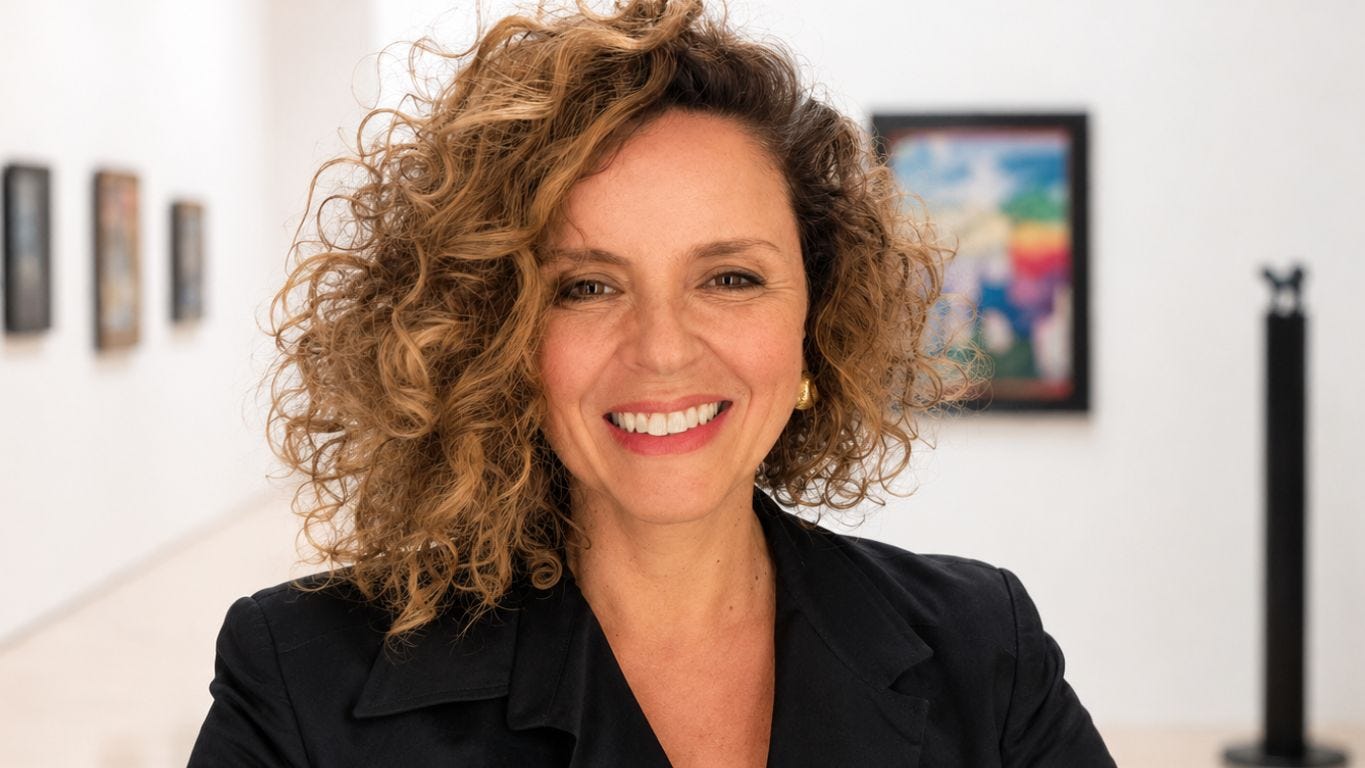
Sabrina Moura (Ph.D., Art History) is a Brazilian writer, researcher, and curator based in the UAE, where she heads the Research program at Louvre Abu Dhabi. Her work centers on the networks of artistic exchange between Africa and Latin America, and the relationship between historical archives and contemporary practice. She has held fellowships at the Käte Hamburger Research Centre in Munich and Columbia University, and was sponsored by UNESCO to research the collections of the Museu Nacional da República in Brasília. Her publications include *Arqueologia da Criação* (2022) and the edited volume *Southern Panoramas* (2015). Her research has been supported by the Getty Foundation, ProHelvetia, CNPq, and the German Federal Ministry of Education and Research.
Could you introduce yourself and tell us about your role at Louvre Abu Dhabi — what does heading the Research program actually involve?
Leading the Research program at Louvre Abu Dhabi in practice means I’m sitting at this interesting crossroads between curatorial work, collections, science, and engagement.
Day to day, that translates into developing programs and partnerships, running a program of fellowships and grants, leading the development of symposiums, workshops and a new research journal. But also finding ways to bring scholars and museum professionals into genuine conversation with each other. So a big part of what I do is building bridges.
What I find most exciting about the role is pushing back against the idea that research is something that happens quietly in the background. I really believe it should be shaping in-depth curatorial work that leads to exhibitions, collections-building, and the interpretation of artworks.
You’ve built your research identity around the Global South — the artistic exchanges between Africa and Latin America, the archives, the overlooked geographies. How does that intellectual background inform your work at an institution like Louvre Abu Dhabi?
Honestly, it’s probably the thing that drew me to this role in the first place. My curatorial and academic work has always been about building knowledge beyond the dominant art historical canon — initially focusing on the cultural exchanges between Africa and Latin America, and now the Arab world.
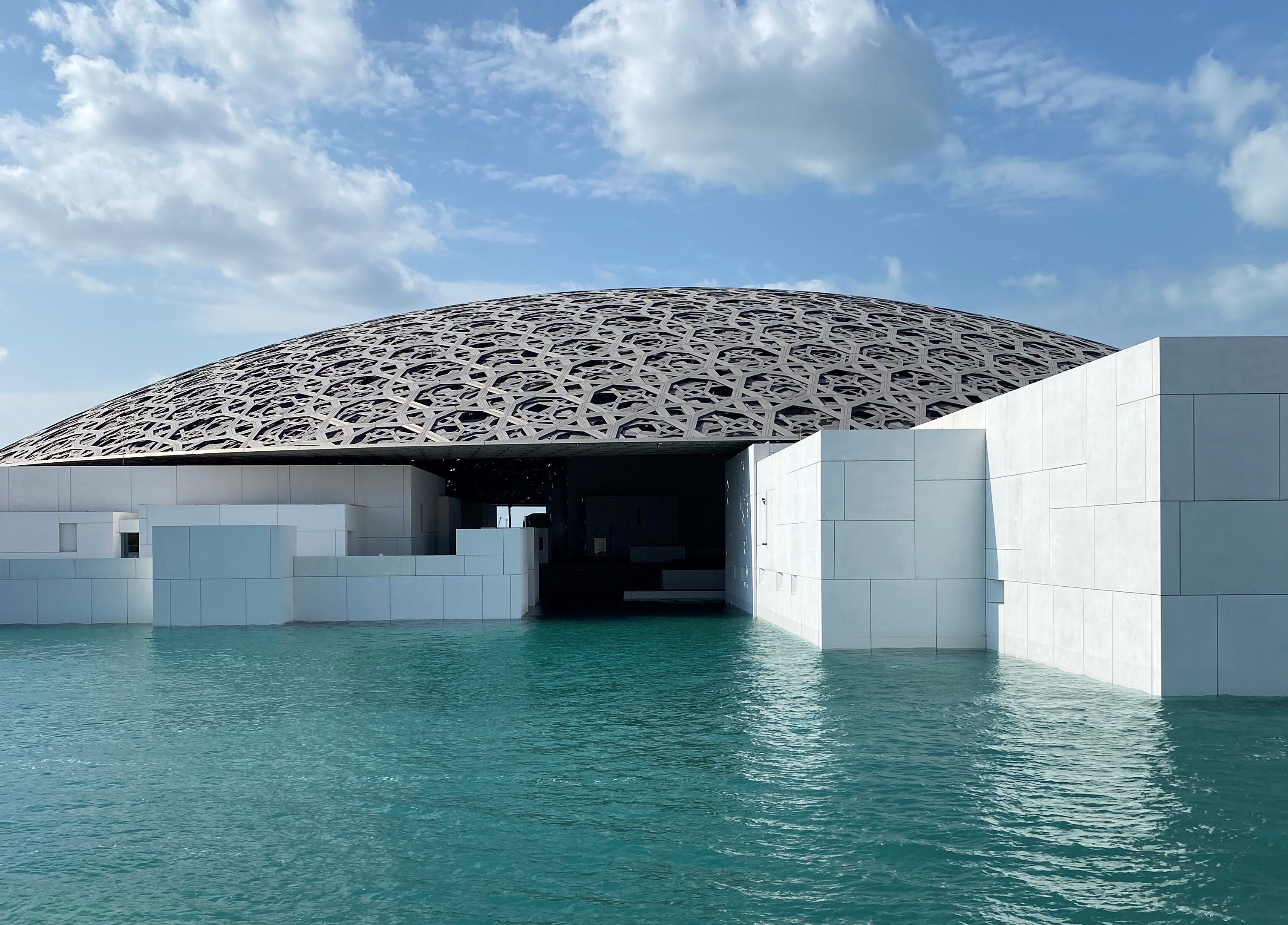
These interests fit with what Louvre Abu Dhabi does. The whole model of the museum is about exchange and cultural encounters. And working here — within the burgeoning ecosystem of the Saadiyat Cultural District — has deepened my understanding of what museum research can be.
This is a context that brings together different research cultures, where local perspectives coexist and intersect in a very international environment. What strikes me most is how many different vocabularies are in the room at any given moment. Professionals trained in different disciplines and countries, all working on the same objects, but asking fundamentally different questions and not always sharing the same language for it. That friction, rather than settled consensus, is actually where the interesting thinking happens.
The museum launched three pilot studies with the Sorbonne Cluster for Artificial Intelligence (SCAI) on AI-assisted translation and terminology management. Can you walk us through what you actually built — and what the experience taught you about where AI genuinely helps and where it falls short in a museum context?
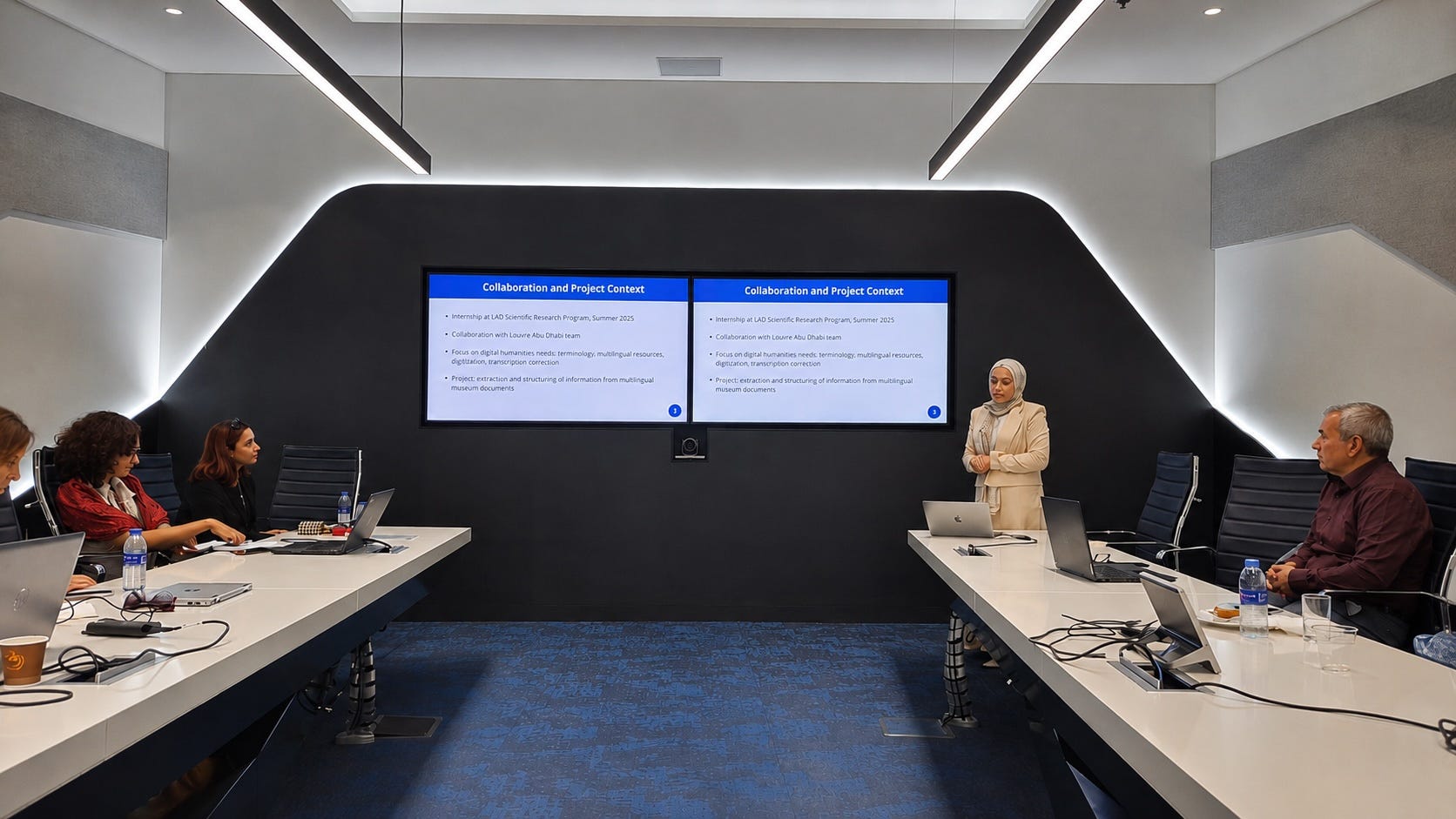
This is part of a collective endeavor between the teams at Louvre Abu Dhabi and the Sorbonne Center for Artificial Intelligence. We worked with SCAI to test how AI could support translation workflows and terminology management, specifically, how it could help us work with art historical vocabulary, and bring more consistency in a museum with a trilingual mandate, spanning English, French and Arabic.
I think AI can speed up preliminary translation, flag inconsistencies, and handle pattern recognition across large datasets in ways that would previously take weeks or months. But we know very well that language is almost never neutral. So, in the case of museums, when you’re translating a curatorial concept, you’re not just making a linguistic choice; you’re making an intellectual and cultural decision. And that’s where AI still has real limits. The honest takeaway is that it works best when it’s expanding what researchers or curators can do, not when it’s being asked to replace what they know. In a museum environment, and in digital humanities more broadly, human judgment in the loop is fundamental to the whole process.
Looking more broadly at the museum world — how do you see AI changing the fundamental encounter between an artwork and a visitor? And what does that mean for the people who make that encounter possible: the curator, the mediator, the educator? Are we talking about an evolution of these roles, or something more radical?
I think AI is part of a much bigger shift, not just in how museums relate to knowledge and audiences, but in the humanities more broadly, and that has consequences for museums too. One of the most promising things is the possibility of interpretation becoming more responsive to diverse audiences. But I don’t think AI changes what happens between a visitor and an artwork in the galleries. This encounter is still embodied. We still have to sustain the gaze, the conversations, the physical interactions. The digital, now enhanced by AI, can be a facilitator, but it doesn’t replace the moment itself.
What AI makes possible is moving through vast sets of data, exploring archives in ways that were previously impossible. That changes things radically. But it also makes something urgent very clear: we need AI literacy. And alongside that, we as humans still need to exercise our potential as thinkers, as people who can sustain real oral dialogue.
I see this in my teaching, not just in my work at Louvre Abu Dhabi. AI is almost ubiquitous among students now. We are using it, but sometimes without questioning it, sometimes even ashamed of using it, without really asking how or why. I’ve been more and more focused on supporting critical dialogue with my students because of this. But honestly, we need more time to think about all of it. We haven’t figured it out yet. Yuval Noah Harari puts it well when he says the risk isn’t AI becoming too powerful, it’s us becoming less human in the process.
Interview by Benjamin BENITA
MORE
Yannick Lintz: Reinventing the Guimet

You are President of the Guimet – French National Museum of Asian Arts, one of the world’s largest museums of Asian art outside the Asian continent, with approximately 60,000 works and multidisciplinary teams covering conservation, research, mediation and programming. Before taking over the presidency of the Guimet, y…
400 Tech Specialists, 100 Historians, 2 Years, One Vision: How China's Deji Art Museum Is Redefining the Visitor Experience

We had the privilege of meeting Ms. Lin AI, Director of the Deji Art Museum in Samarkand, during the International Conference on the Future of Museums organized by UNESCO in November 2025, in which we took part (see the link at the end of this article). Ms. AI graciously agreed to be interviewed for MuseumWeek…
Agnès Callu at the GrandPalaisRmn Chair of Excellence. Research and Aesthetic Loves at First Sight. Interview.

Agnès Callu, you are a historian and philosopher of art. You are a graduate of the École nationale des Chartes (Prix Lenoir), holder of a doctorate from Sciences Po Paris (Prix Chaix d’Est-Ange of the Académie des sciences morales et politiques for your published thesis on the Nietzschean philosopher Gaëtan Picon), Habil…
 | A guest post by
|