


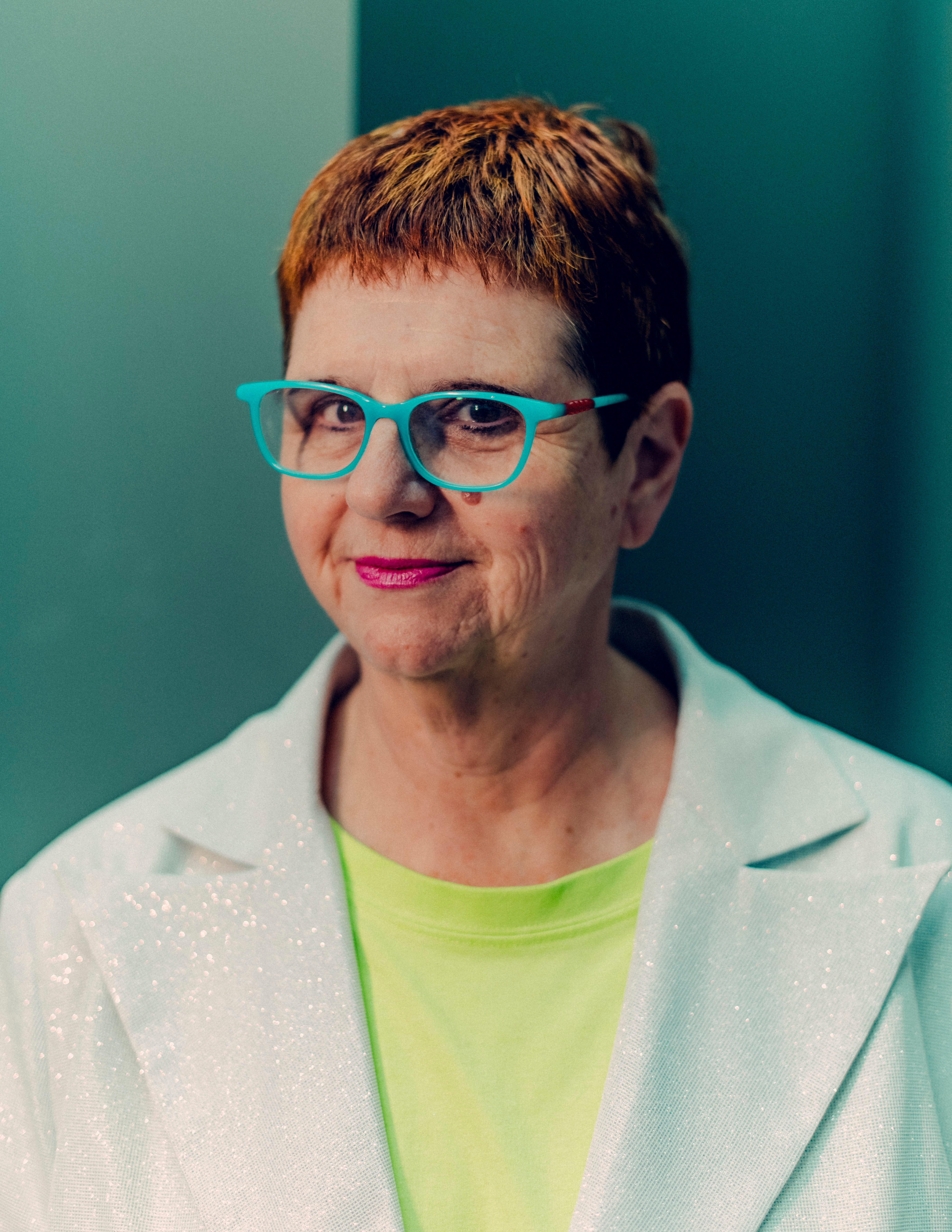
You are President of the Guimet – French National Museum of Asian Arts, one of the world’s largest museums of Asian art outside the Asian continent, with approximately 60,000 works and multidisciplinary teams covering conservation, research, mediation and programming. Before taking over the presidency of the Guimet, you had a career as an archaeologist and curator, specializing notably in Central Asia. Could you describe what your role entails today - your major responsibilities, the teams you coordinate - and tell us how this field experience has shaped the way you lead an institution of this magnitude?
Before taking over the direction of the Guimet in Paris, I began my career as director of a regional museum in southern France in the early 2000s, and was then appointed to the office of the French Minister of National Education as an advisor for artistic and cultural education. In 2003, I joined the Louvre Museum and took over the direction of its Islamic Art Department in 2013. All these experiences have given me both a deep knowledge of major public policies in the cultural field and an understanding of the reality of museum life. I learned how to define a public development strategy, to reflect on how collections are valued and enriched, to organize research policy, to program artistic and cultural events… but also to work with exhibition designers, maintain buildings, ensure the safety of works, and manage the staff who bring museums to life. This is what is exhilarating about this profession: the privilege of being close to masterpieces of universal art and reflecting on how to make them accessible to the general public. It is a great and noble public service mission! Obviously, for almost 4 years now as president of a national museum like the Guimet, my mission is far more strategic.
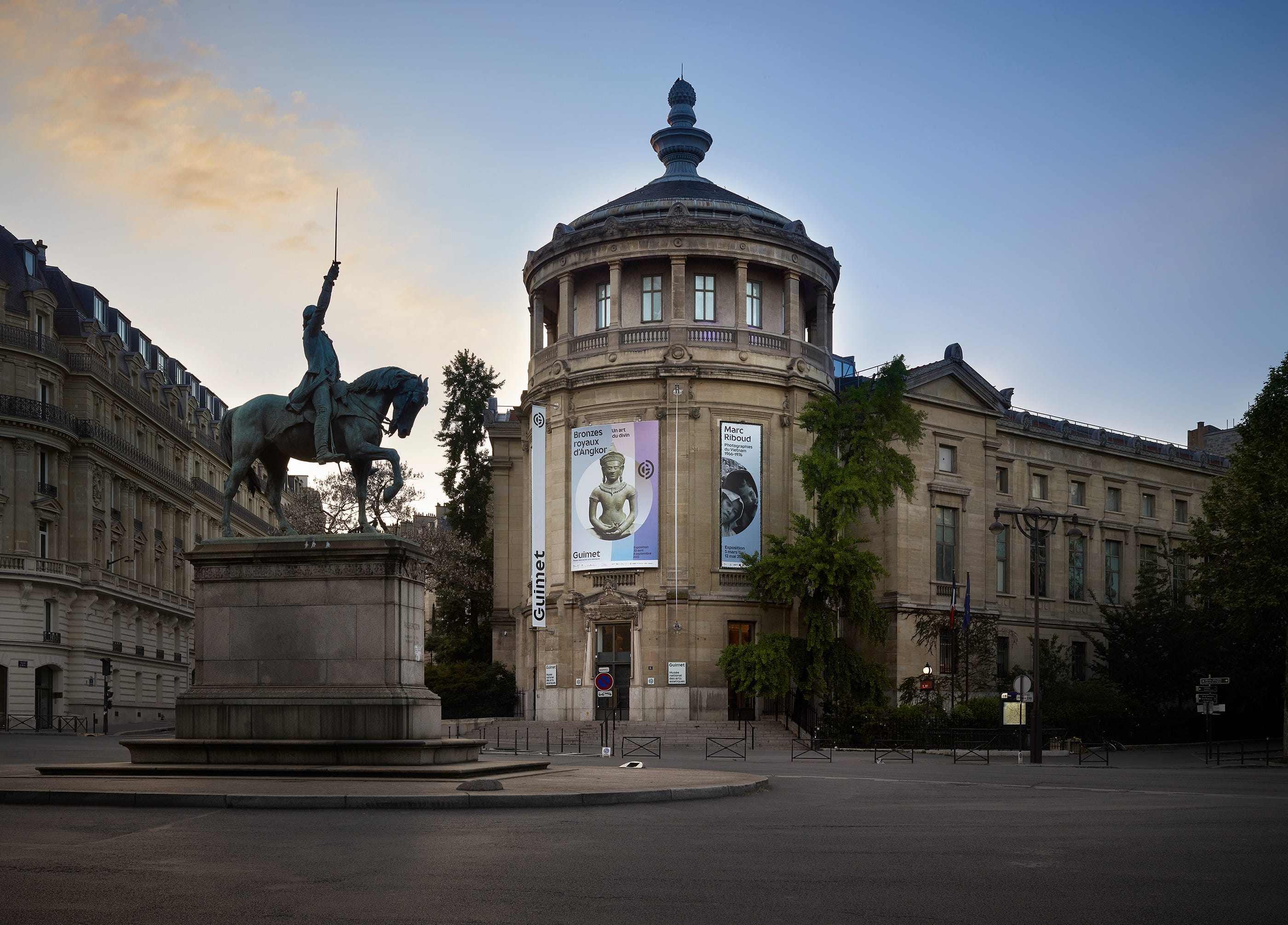
This is when I launched with my team a major project called Guimet 3.0.
Its ambition is to enable a complete refoundation of the museum and its three buildings by 2030. The last major renovation was designed 30 years ago, and today’s Guimet Museum no longer meets the expectations of different audiences or the needs of a modern museum. Its very mission must be both reconsidered and strengthened, particularly in a world where Asia is gaining importance by the day.
From this perspective, and to open itself to all audiences without exception, tomorrow’s museum will need to be simpler to understand and appropriate, more pleasant to experience. Blending knowledge and pleasure, it will offer a more complete, convivial and enlightening visitor experience, where comfort will be essential across all its sites.
At the heart of this project is also the creation of Villa Guimet, a major international research center on Asian arts, as well as the opening of a large museum through which visitors will discover the collections of two passionate lovers of Japan through a public-private partnership with one of the world’s largest collectors of Japanese prints.
The Guimet enjoys a unique position in the global cultural landscape - encyclopedic collection of Asian arts, diplomatic influence, very diverse audiences ranging from the general public to specialist researchers. How would you define the museum’s deep mission, and what fundamentally distinguishes it from any other institution dedicated to Asian arts in the world?
I would say that the role of the Guimet Museum has never been more important than it is today, as in recent years the center of gravity in terms of diplomacy, politics, economics and science has clearly shifted towards Asia.
Asian cultures are now more present than ever in our daily lives in the West. You only have to look at the cultural practices of younger generations: they read Japanese manga, listen to K-Pop, watch Bollywood films or K-Dramas, follow K-Beauty trends, eat Chinese food and go on holiday to Thailand… Asia is everywhere in their lives! And particularly in France, where we have very strong historical, cultural and friendly ties with many countries on the continent.
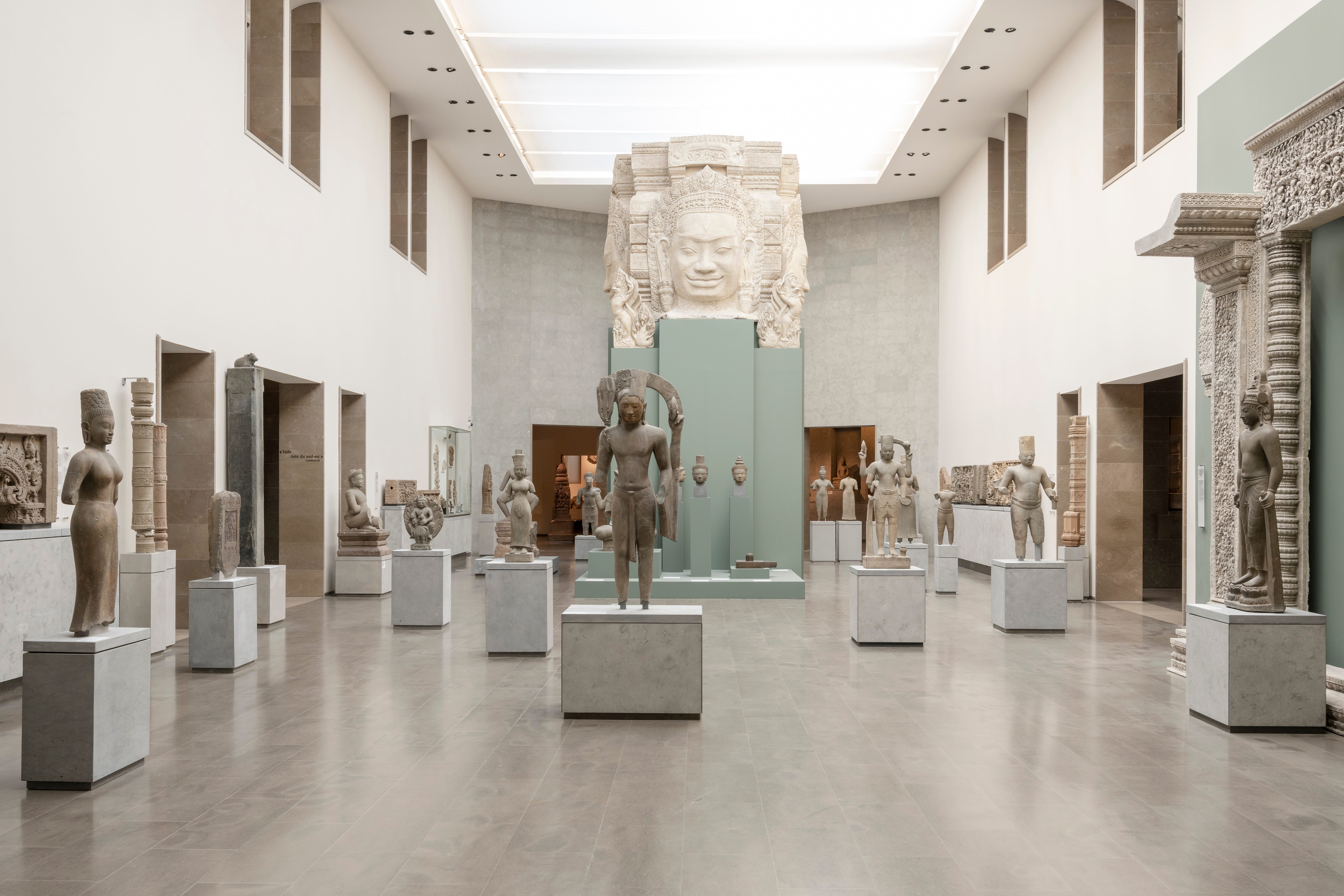
Yet at the same time we see a lack of knowledge about Asia and its cultures, and this is where our mission is crucial: because of the richness of our collections and the expertise of our curators, we are able to put the present into perspective and provide keys to understanding this constantly evolving world - and all the more so with the exponential development of the digital sphere - to explain history and traditions, religions and schools of thought, major moments in the history of global art and the perspectives of today’s creators: filmmakers, researchers, artists, writers - the opportunities to speak about Asia are endless! And in an increasingly fragmented world, I am certain that culture has a crucial role to play in helping us understand one another.
The HikarIA project has generated considerable attention and interest far beyond museum circles. Beyond the technological aspect, what did this experience concretely reveal to you about the possibilities - but also the limitations and resistances - of AI in the service of cultural heritage?
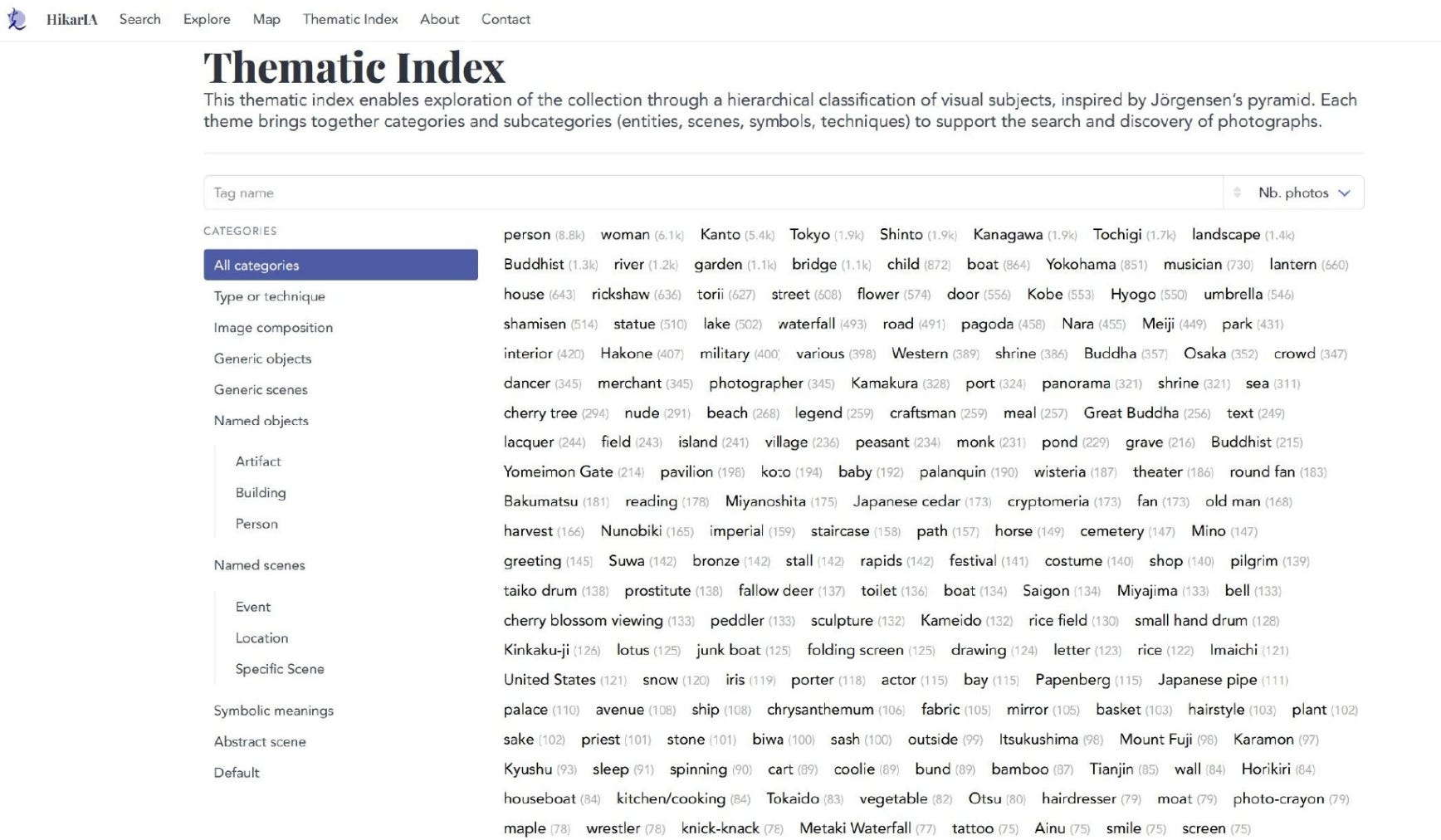
Indeed, the HikarIA project brought us several years ago into the reality of a 21st-century museum, with the development of AI for the automatic analysis of thousands of old photographs from our collections. The success of this project demonstrated the infinite possibilities offered by AI but also the necessity of taking into account its limitations in terms of scientific rigour, for example. It allows for considerable time savings but introduces a need for a more collaborative dimension in research. This will be a central point of the future Villa Guimet, our international research center for Asian arts. We look at these developments with great interest but also with the caution and perspective of historians that we are!
NDLR:
Editor’s note: In the HikarIA project, AI was used notably for similarity searches, making it possible to automatically retrieve photographs presenting visual or thematic similarities to facilitate historical and iconographic research.
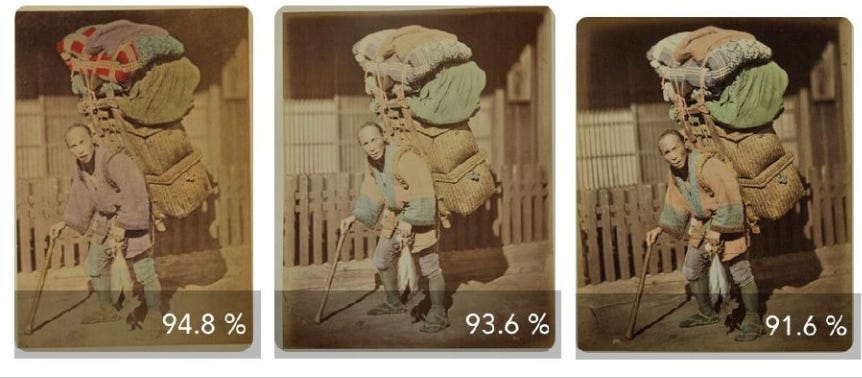
AI was also used to enhance the accessibility of collections, particularly through the automatic generation of image descriptions, data sharing via the IIIF protocol and a multilingual interface in French, English and Japanese.
It also made it possible to automatically correct image orientation, recognize people and objects present, and extract place names from handwritten captions. Finally, AI contributed to producing statistical analyses and improving content indexing.
MuseumWeek 2026 is built around the theme “Intelligences, Museums, Futures”. If you were to project the museum a decade from now - with AI, without it, or despite it - what future excites you most, and what concerns you? Are there any projects or strategic directions you can already share with us?
Everything is somewhat summed up in our major strategic project called Guimet 3.0: it embodies the ambition to meet 21st-century challenges, combining scientific rigour, modernity, accessibility and environmental responsibility. As a place of exchange and dialogue between Asian and European cultures, the Guimet will offer a rich and varied program that will make it a space for debate open to the great challenges of our contemporary world. A museum open to researchers, artists, enthusiasts and the curious, which will bring a fresh perspective to foster better understanding of Asia. And architectural modifications will aim to enable this transformation, as will progress in new technologies, in terms of immersive experiences and educational mediation.
A completely renewed cultural and scientific offering to inspire visitors from around the world with the desire to come and come back to the Guimet – that is my ambition for the years ahead!
Interview by Benjamin BENITA
PLUS
Dr Yannick LINTZ holds a Ph.D. in Achaemenid History from La Sorbonne University and graduated as General Curator of Heritage.
She began her career as director of the Musée des Beaux-Arts in Agen (France). Between 2000 and 2002, she was advisor for museums and heritage to the French Minister of Education.
She joined the Louvre in 2003, where she was appointed head of the Islamic Art Department in 2013, until her appointment as President of the Guimet - National Museum of Asian Arts (France) in November 2022.
Dr Lintz has curated numerous international exhibitions at the Louvre Museum and abroad, among which Medieval Morocco, Splendors of the Uzbek oases or Le Louvre à Téhéran. In 2020, she organized a nation-wide event, deployed in 18 French cities, called Islamic Art: A Past for a Present.
As Guest Professor at the Sorbonne University (Paris, France) and Senghor University (Alexandria, Egypt), she has taught courses on Museum Management and Heritage Education.
HikarIA: https://www.guimet.fr/en/museum-news/hikarla-project-france-2030-award-winner
Guimet - musée national des arts asiatiques : Web - Instagram - X