


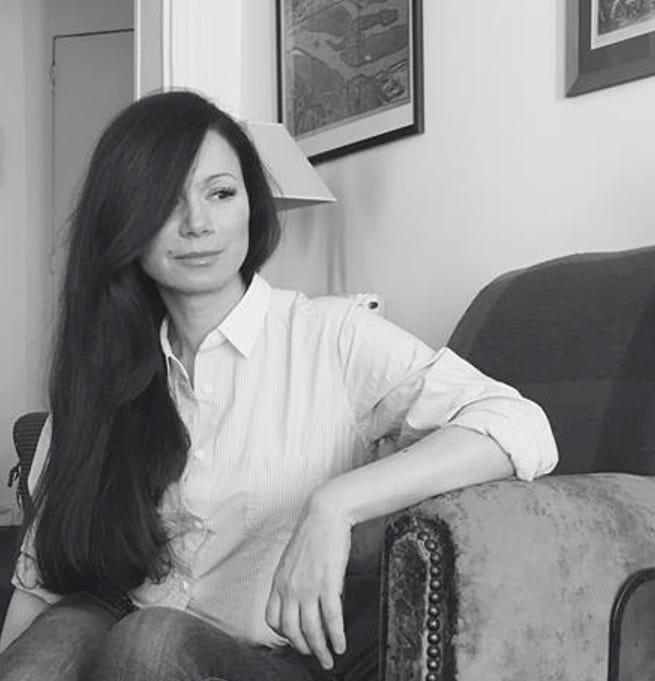
Agnès Callu, you are a historian and philosopher of art. You are a graduate of the École nationale des Chartes (Prix Lenoir), holder of a doctorate from Sciences Po Paris (Prix Chaix d’Est-Ange of the Académie des sciences morales et politiques for your published thesis on the Nietzschean philosopher Gaëtan Picon), Habilitated to Direct Research at EPHE/PSL, and qualified as a University Professor. Since 2019, you have been a statutory research member at EHESS/CNRS within the Laboratory of Political Anthropology (LAP, UMR 8177). You have just taken, for a five-year term, the helm of the GrandPalaisRmn Chair of Excellence in Research, Creation & Innovation. What does this represent for you, and what ambitions do you bring to this role?
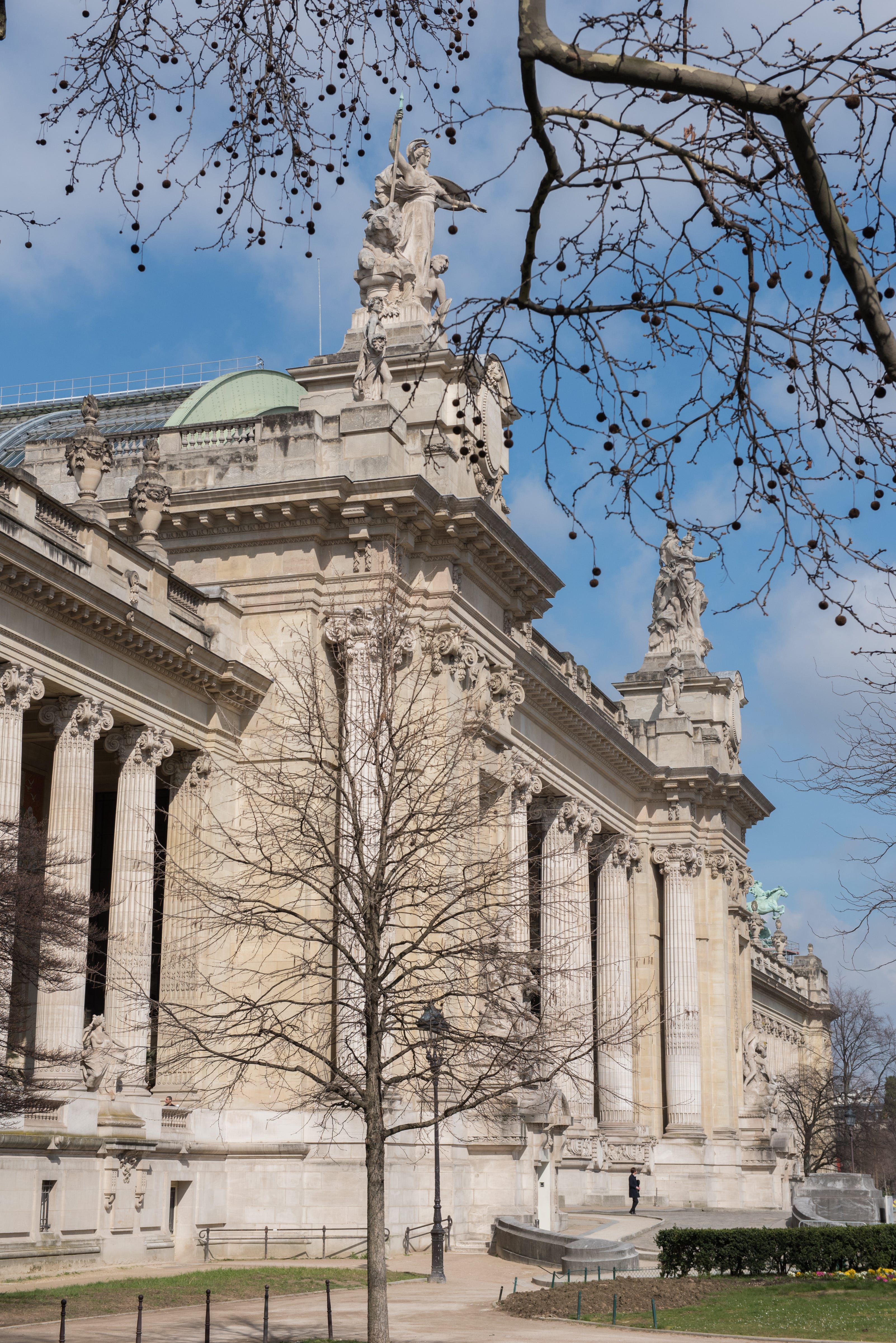
I conceive of the Grand Palais as a place of excellence where, for five years, I will be able to deploy my research for the benefit and in the service of the great visionary cultural institution it embodies.
Always working at the intersection of what Art does to the political contemporary and what the political, politics, and the effects of politicisation do to Art when it is enacted in the contemporary, I am establishing massive epistemological shifts in my research. I conceive of the contemporary in the paths of Saint Augustin as “the memory of things past and the expectation of things to come,” to which I now add, in a philosophical and anthropological vein: a place of relations, a space-time of gaps, conflicts, junctions, dissimilarities, crises, ruptures, ambiguous situations, experiences of the irreducible. In order to work, I establish, following Edgar Morin’s Pensée complexe [Complex Thought], a resolutely interdisciplinary methodology resting on a hybridisation of disciplines, whose cross-fertilisation experiments, on the academic table, with an integrative, open, progressive, performative, scientifically optimal, exploratory, and empirical approach. Working on my current research project entitled “Anthropology of Artistic Bodies: Sciences and Emotions,” I explore three major subjects: first, I reflect on the upstream of creation (at the macro scale, in the artists’ studios; at the micro scale, beneath the primitive lines of drawing — on this subject, I follow the philosopher Jean-Luc Nancy); then, following Merleau-Ponty’s paths, I reflect on the body, the skin, the flesh of images in Art and in Literature; attentive to the theses of Donna Haraway, I reflect on the couple “Art & Science” which, singularly at the edge of artificial intelligence, is possessed of a posthuman capacity to transform and transfigure the world.
At the Grand Palais, over five years, I will deploy a demanding programme organised into five strands which unfold and entwine around five keywords: Agency; Critique(s); Rebound; Talent; Emotions. These five intellectual circles call to one another, respond to one another, and connect with one another.
First, within the ”Agentivity” programme, I will offer an academic research seminar reflecting on the GrandPalaisRmn as a powerful, multifunctional generator-reactor of research, culture, and creation from the nineteenth century to tomorrow.
Second, within the ”Critique(s)” programme — here I invoke the philosopher Rainer Roechlitz — I will organise, in the format of a Grand Interview, the subject of a podcast in partnership possibly with France Culture, a lecture series centred on the creative work of an artist exhibited at the Grand Palais or at an institution supported and accompanied by the establishment.
Third, with ”Rebound” — on this point, the poetics as well as the poïetics of Gaston Bachelard, as often, accompany me — anchored to the cultural programme of the GrandPalaisRmn and its exhibitions, I will engage in wide-angle debates, “on the high seas” (sic), with philosophers, anthropologists, artists, designers, architects, filmmakers, writers, and so forth.
Fourth, under the ”Talent” heading, I will explore the areas of expertise of the Grand Palais. Thus, on 26 November next, I will organise a study day around the institution’s photographic agency, within the framework of the Bicentenary of Photography and the fiftieth anniversary of André Malraux’s death. The proceedings of the day, entitled “The Universe of Forms. The Imaginary Museum of the Photographic Agency (1946–2026),” will be published by GrandPalaisRmn as the ground zero of a collection on the Bourdieusian “distinctions” of the Grand Palais.
Fifth, I will open an ”Emotions” axis — here I bring to the table, among others, the theories of Jan Plamper. Within this programme, fostering the narrative identities promoted by Paul Ricoeur and the patrimonial emotions so finely analysed by the anthropologist Daniel Fabre, I will constitute a library of autobiographical accounts about the Grand Palais, giving rise to the elaboration of sensory maps as well as mental cartographies.
The Chair is one of excellence: I shall endeavour to produce work of the same calibre. It is structured around the trialogue of Research, Creation, and Innovation. Here I think of Louis-Claude Paquin, professor in Montreal:
”Conceiving of an entwining of research upon creation and, reciprocally, of creation upon research allows us to sublimate the epistemological tension between the phenomenal continuity of these two activities and their eventful discontinuity.”
This research through creation, or this creation made possible by trans-, pluri-, extra-, and interdisciplinary research, I would situate as inscribed within our (ultra, extreme) contemporary, engaged in the digital transition; further, within our contemporary, informed and traversed by the digitalisation of a global and globalised world; further still, within our contemporary, transfigured, renamed, and reconfigured in its models, its systems, but also in its values, by the promises — destabilising, no doubt, yet innovative and opening, with certainty — of Artificial Intelligence.
To conduct this Chair, the Lectures traversières [Cross-Readings] of the semiologist philosopher Louis Marin will be my daily companions. As for the Théorie du jeu of the sociologist Roger Caillois, great translator of Borges, it will accompany me in understanding, hearing, and seeing the Réunion des musées nationaux merged with the Grand Palais through the prism of Agon (competition), Alea (chance), Mimicry (imitation), Ilinx (vertigo). With them, I will reflect on the future structures and “lignes de fuite” (to speak as Deleuze would) of an institution that is today a centaur.
Such that, from the outset, in 2026 and beyond, the GrandPalaisRmn presents itself as a Hub, functioning as a switchboard insofar as, gathering powerful and complementary equipment within an apparatus logic, it manages flows and is, de facto, capable of modifying the connections between circuits. A corpus of infrastructures with strong aesthetic capital and a coagulation of data that are themselves aesthetic, it presents itself today as a distribution centre that, by circulating the world’s masterpieces alongside its own productions, manufactures a new cultural and museological urbanism, while simultaneously becoming a particle accelerator for those who join its “station.”
Such that, from the outset, in 2026 and beyond, the GrandPalaisRmn was, is, and will be the originary, indeed matricial, Fab Lab of “French cultural exception”.
You speak of an “aesthetic love at first sight” and draw upon the imaginaries constructed around the Stendhal Syndrome. What do you mean precisely by this, and why does this syndrome serve as your point of departure for thinking about emotions in the face of art?
My research and teaching project, at the intersection of the sciences of art, philosophy, Emotional Studies, and Computer Science, places as its ground zero the so-called Stendhal Syndrome, whose imaginaries it hopes to examine and whose effects it hopes to measure. This disorder, a psychosomatic condition, is reputed to cause accelerated heart rate, dizziness, suffocation, and hallucinations in certain individuals exposed to “an overabundance of artworks” (sic). One rereads Stendhal, who during his journey to Italy in 1817 reported: “I had reached that point of emotion where the heavenly sensations given by the Fine Arts and passionate feelings meet. On leaving Santa Croce, I felt my heart beating, life was drained from me, I walked in fear of falling.” Indeed, positing as a preamble that creation provokes “aesthetic shocks” (Picon) — visible and invisible (Merleau-Ponty) — which traverse, disturb, and activate bodies become “amorous and ardent” (Barthes), I undertake to observe, on the one hand, the bodies and gestures of artists at work within their “creative hut” (Callu); and, on the other hand, I bring to study the bodies and gestures of spectators of “fragments of creation” (Malraux), that is to say, of works which, some of them, at the end of a process, attain the status of patrimonial object.
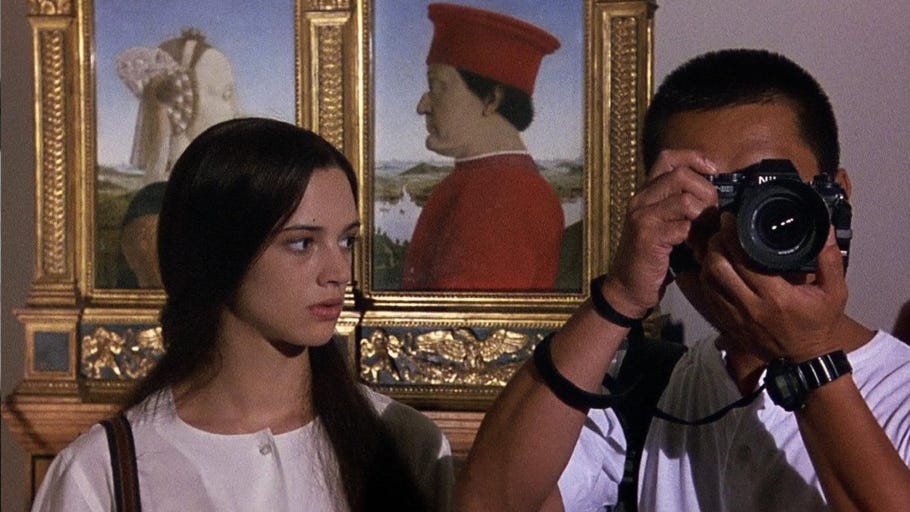
Such that, at the global level, within this research and teaching programme — poised between Sense and Sensibility — it is a matter of returning to the aesthetic roots of a concept elaborated in the second half of the twentieth century — yet whose source is nineteenth-century and Romantic — and of furnishing its proof: at once through the systematic recourse to applied mathematics constructing the algorithms, and at once through the tool of design graphically restituting the data. In so doing, the Stendhalian “aesthetic shock” — an object worked upon by medicine and the cognitive sciences yet remaining inscribed “rootlessly” within literary and cinematic imaginaries — becomes a historical object graspable by the community of art sciences. In so doing, the human being as “ceremonial animal” (Wittgenstein) is observed in the geography of his or her body (A. Callu, seminar “Art and Corporeity. Phenomenology of Formal Universes”), which is disrupted during an amorous and sacred ceremony, not only with art “in the process of being made” but also with art sanctuarised upon the museum’s picture rails.
You are launching the ExtaArt research programme. Could you present its object, its stakes, its methodology, and tell us over what timeframe and with which academic and scientific partners it is being deployed?
The ExtaART research programme, drawing upon the imaginaries constructed around the “Stendhal Syndrome,” intends, at the intersection of the philosophy of art, the history of emotions, and Computer Science, to explore the sociogenesis of feelings — from ecstasy to repulsion — experienced in the face of artworks, when they are produced and then — museified — viewed. The object: the study of emotions as they are created, put into circulation, and received, is conducted across two fields: first, the artist’s studio; then, the museum. The first scene, situated in the artist’s studio, seeks to reconstitute the range of emotions that traverse the creator at work, from the “thought-drawing,” the drawing/sign/codex princeps, the creative process over the long term, and the final result. The corpus of artists gathers creators specialised in the visual arts, whose age groups, gender, nationality, educational background, stage of career advancement, and so forth, confer upon it a valid and defensible threshold of representativeness. The second scene, situated in the museum, installs itself on the other side of the mirror. The work — in a quantitative perspective when the surveyed population is substantial and crosses social, generational, cultural, political, economic, ethnic parameters, and so forth — consists of observing the feelings experienced before works currently held in European, North American, and Asian museums. Situated here on the side of the “viewer,” the objective consists, through the crossed solicitation of artificial intelligence, aesthetics, and neuroscience, in examining the relations between the emotions experienced in the face of artworks and the corresponding neurological and physiological reactions.
For the moment, only the studio scene is being worked upon, with partners from the hard and exact sciences at Université Paris 8, and notably from Paris-Saclay. The challenge is to develop it at an international scale (in a first movement, European) in connection with partner universities and research laboratories.
The quantitative experiment, situated on the side of the “viewers,” is to be carried out at the Grand Palais, precisely within the framework of my Chair from 2026 to 2030.
The protocol is designed to be replicated across sharply contrasting cultural contexts — in Europe, Africa, Asia, and Latin America. What is the central scientific question that this international dimension makes it possible to resolve: is the transformation of the viewer under the influence of AI universal, or is it culturally differentiated? Are you seeking additional museum partners?
Yes, of course. The aim is to observe the reactions of viewers across multi-sited terrains in order to understand how each individual is not only configured by their inheritances, their theories and praxis of art, but also in what ways the uses of AI destabilise the relationship to works of art. Observing, for instance, “Gen Z” live in a museum in Amsterdam, at the Zeitz Museum of Contemporary Art Africa, in Shanghai, at the Louvre, at the Whitney, is essential to understanding the civilisational and cultural context of an “aesthetic shock” which plays itself out “south of the work,” at the intersection of Knowledge and Culture.
This programme is also part of a partnership with Culture For Causes Network. What motivated this choice, and what role will C4C play — as an institutional partner with an international network — in the visibility and outreach of ExtaArt?
I am delighted that a collaboration with Culture For Causes Network (C4C) is taking shape. This organisation, supported by UNESCO for ten years and active in more than 80 countries, develops actions at the intersection of art, culture, and technology. C4C is therefore a most valuable partner for my ExtaArt research programme, which it will make known at an international scale and whose findings it will share with cultural and academic communities worldwide. Working specifically on the theme of “AI and Culture,” C4C naturally meets my intellectual preoccupations at the helm of the Grand Palais Chair of Excellence, as it possesses both a global network of professionals and artificial intelligence tools dedicated to cultural actors. It is therefore a great pleasure for me that the announcement of this partnership should take place on the occasion of the 2026 edition of MuseumWeek, the international week of museums, which each year brings together thousands of museums across the world to celebrate art and culture within a United Nations framework.
One last question, a more personal one: what are your own works of “aesthetic love at first sight” — those before which you have yourself lost your footing?
The great beloved crowd under my eyes: Piero della Francesca, Henry Moore, Alechinsky, Ingres, Flandrin, Giotto, Rauschenberg, Eugène Leroy, Rothko, Degottex, Motherwell, Dubuffet, and beyond.
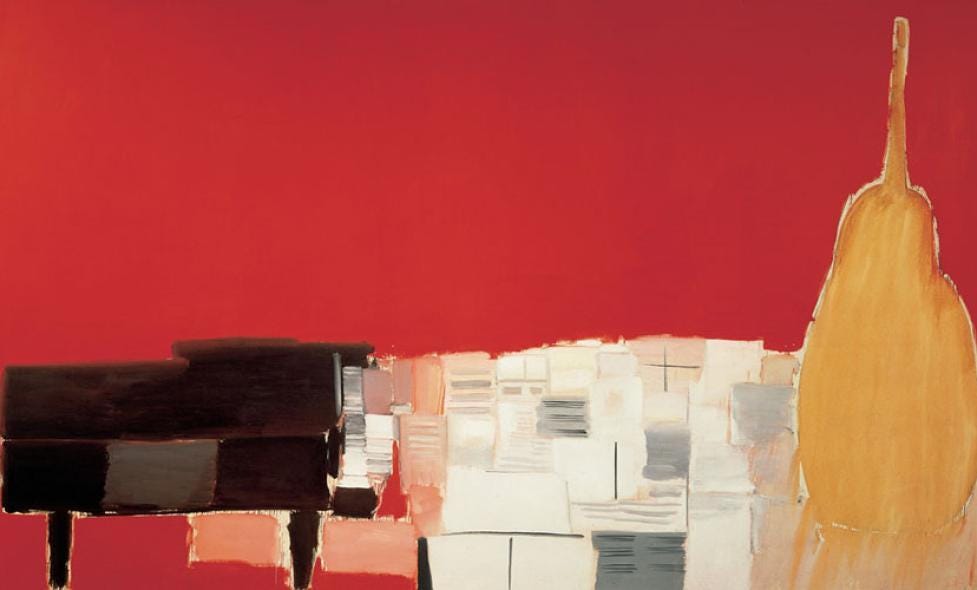
And then, I have experienced two Stendhal Syndromes: the first time, I lost consciousness before [Nicolas de Staël’s Le grand concert]. There, too much beauty at the estuary of art and music with, in the distance, the Blue of the Mediterranean — the whole giving me “La Chamade” [the racing heart].
The second time, I was in New York at MoMA: before an Untitled by Pollock, I thought I was losing my life, for I fell in a faint, my forearms having sought to “enter the painting” (Starobinski), and covering themselves with a strange psychic eczema.
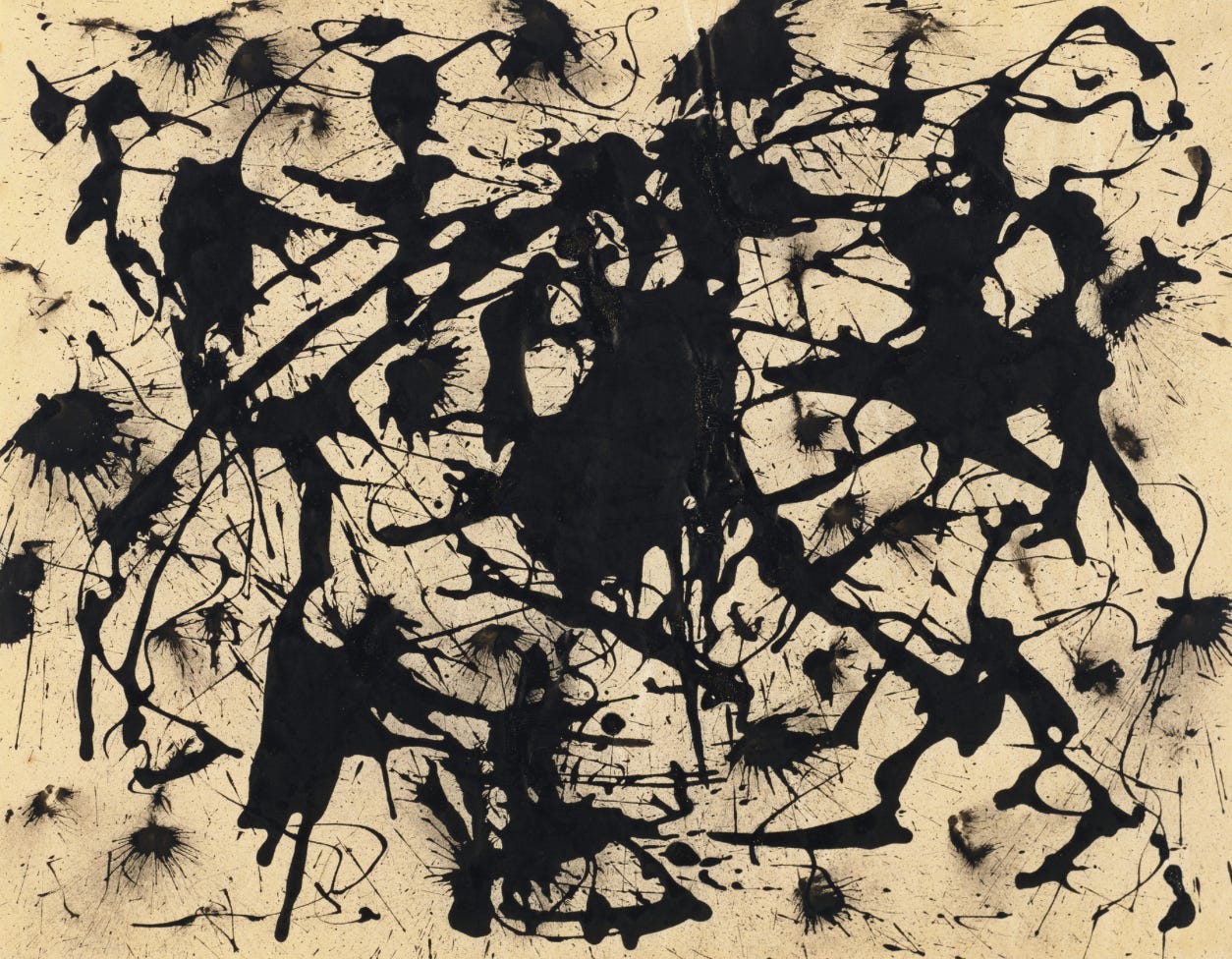
I have always experienced art in this way — as an amorous ceremony within which I abandon myself entirely, in order to establish, a posteriori, a critical discourse. The discursive regimes of theory, thought, sedimented, actualized, always in progress, come to encircle the intensity of my “aesthetic experience,” beating heart and cardinal point of my life.
Interview by Benjamin BENITA
MORE
Agnès Callu: A graduate of the École nationale des Chartes (published thesis, Prix Lenoir) and of the Institut national du Patrimoine (INP/Heritage Curator – State/Museums), holder of a doctorate in contemporary history from Sciences Po Paris (published thesis, Prix Gustave Chaix d’Est-Ange of the Académie des Sciences morales et politiques), Habilitated to Direct Research (HDR) at EPHE/PSL, and qualified as a University Professor (Sections 18 & 22), Agnès Callu is a historian and philosopher of Art. A statutory research member at the Laboratory of Political Anthropology – Interdisciplinary and Critical Approaches to Contemporary Worlds (LAP, EHESS/CNRS, UMR 8177) and a member of the EHESS Doctoral School (ED 286), she is also an Associate Researcher at EPHE/PSL (EA 7347 HISTARA), at ITEM/ENS (Art History Team – Creative Processes/Genesis of the Work, UMR 8132), and at Université Paris 1 Panthéon-Sorbonne (Institut Acte, UR 7539, A2S Unit, Art, Sciences, Societies).
Her recent publications include: in 2016, Gaëtan Picon, les Lettres et les Arts : dans l’atelier de la création [pref. Jean-Michel Leniaud] (Éditions Champion) and Autopsie du musée : études de cas (1880-2010) [pref. Roland Recht] (CNRS-Éditions); in 2017, Gaëtan Picon (1915-1976) : Esthétique et Culture [pref. Jean-François Sirinelli, afterword Yves Bonnefoy, new ed.] (Éditions Champion); in 2018, Culture et élites locales en France (1947-1989) [pref. Jean-Louis Fabiani] (CNRS-Éditions), Le Mai 68 des historiens [pref. Patrick Boucheron] (Presses universitaires du Septentrion) and, with Roland Recht, L’Historien de l’art : Conversation dans l’atelier (L’Atelier contemporain); in 2019, Dessein, Dessin, Design : pour une fabrique médiatique de l’histoire (Éditions Hubtopia); in 2020, Épistémologie du dessin. Concepts, lectures et interprétations, XIX_XIXe. (Éditions Jacques André); in 2023, Images et architectures mathématiques de la séduction (Le Bord de l’eau) and Richard Texier. La bibliothèque des sentiments, récit d’une élastagenèse (Éditions Jacques André); in 2024, Eva Jospin. Des baptistères en forêts (Le Bord de l’eau); in 2025, Bibliothèque(s) des nuages. Poésie, espaces et representations (Éditions Jacques André); and in 2026, Alireza Shojaian. Masculinités persanes. Chromes et graphes, Lyon (Éditions Jacques André).
She serves as series editor for three book collections: “Le Dessin au Présent” (Éditions Gourcuff-Gradenigo), “Dans le silence de l’atelier” (Éditions Jacques André), and “Imaginaires de l’architecture” (Éditions du Bord de l’eau).
Agnès Callu has been appointed holder of the “GrandPalaisRmn Chair of Excellence in Research, Creation & Innovation” (2026–2030).
The GrandPalaisRmn Chair of Excellence “Research, Creation & Innovation”
On Stendhal
https://www.academie-francaise.fr/les-immortels/dominique-fernandez
On the Stendhal Syndrome
https://stm.cairn.info/revue-hegel-2014-2-page-146?lang=fr
https://www.cinematheque.fr/film/84836.html
On Pollock’s work
Le Grand Concert and Staël
https://portail-savoirs.departement06.fr/annuaire-general/nicolas-de-stael-le-concert