


You were trained as both an architect and an industrial designer, yet your work carries a strong emotional and almost archaeological dimension. How did your journey lead you to this unique artistic language?
As a first year college student attending architectural history class, I saw Frank Lloyd Wright’s design of Fallingwater for the first time. I saw the structure of music in the form of steel, concrete and stone and knew that it would be my mission to understand the true nature of such a creation. I dedicated many years to this cause and it continues to intrigue me till this day.
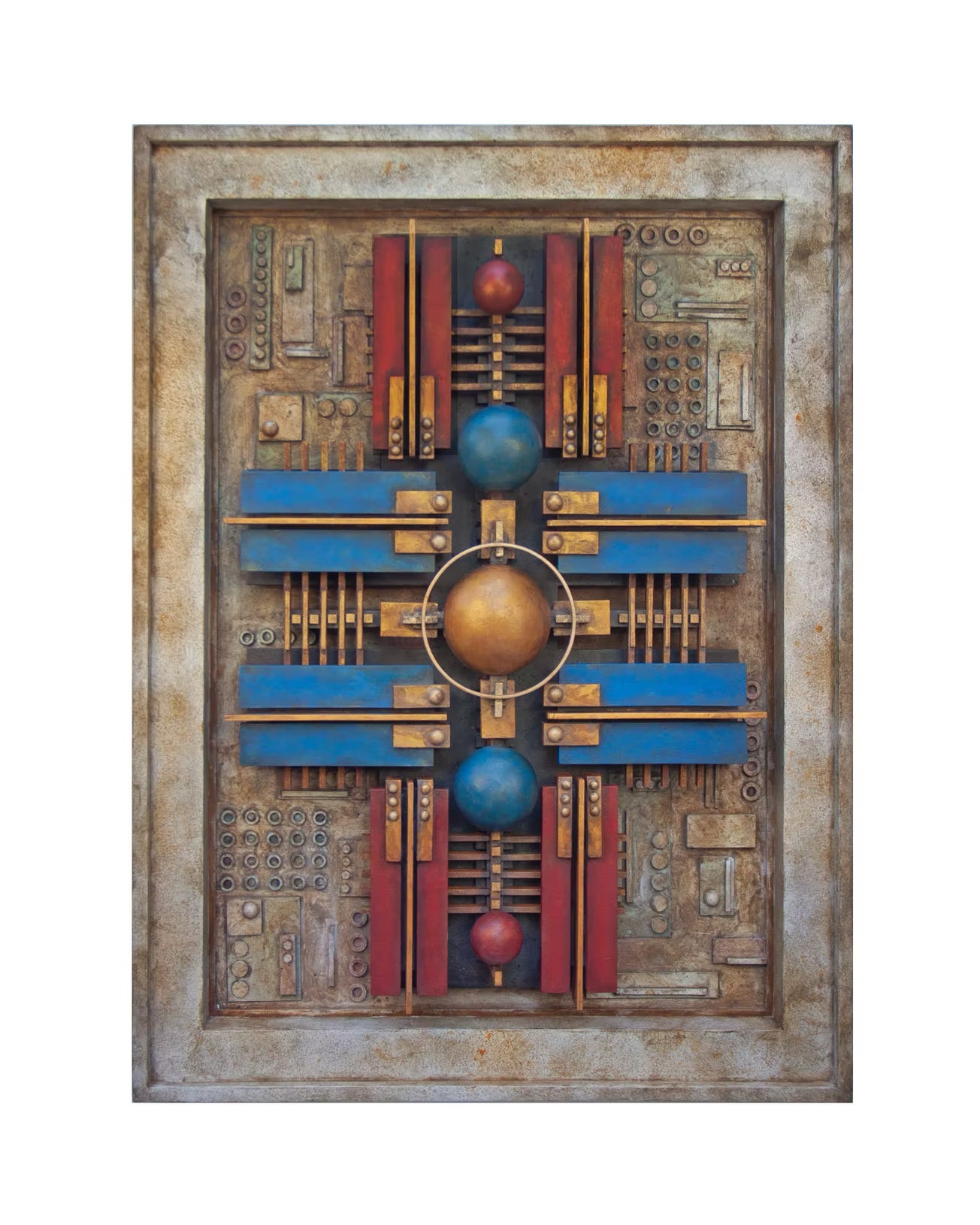
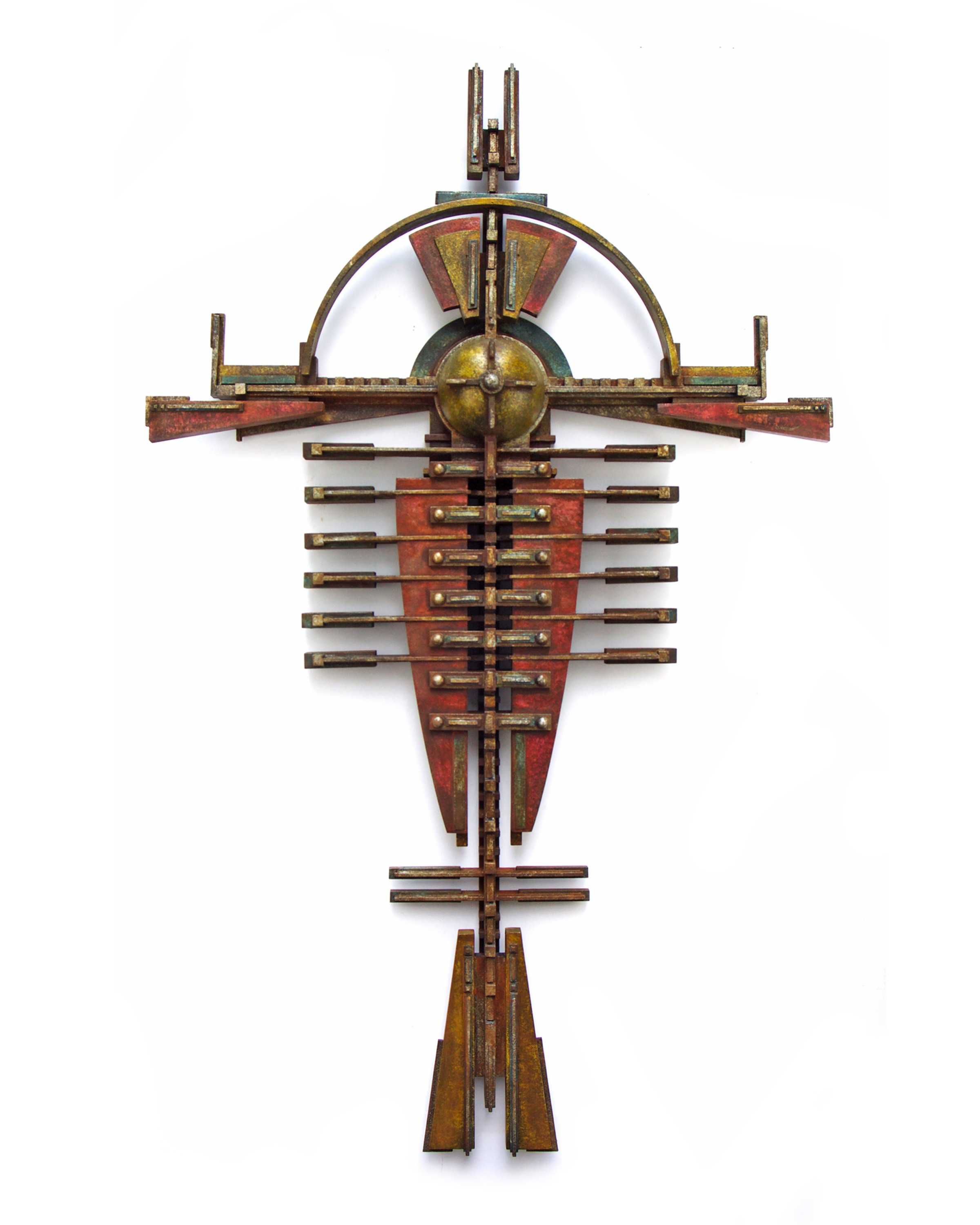
My analysis of Fallingwater led to my development of a “creative trinity” composed of the elements of inspiration, technique and discipline. The inspirational component of my art draws from my fascination with human invention through the ages and a desire to express a sense of a romantic past ever informing the present and inspiring our dreams of the future.
I grew up in a rural farming community where the dilapidated structures of smaller family-owned sugar mills and industrial buildings from the early 20th century were left abandoned and much of the machinery from that time was left rusting in the fields. The relics of this past were all around me as the new regional sugar factories were built and the era of steam power (still in use into the 1970s) and simple gasoline machines were replaced by modern diesel, new technologies and advanced production methods. The past and present existed together and was a tangible reality of my youth.
You often describe your works as “future relics.” How should we understand this idea, and how did it first emerge in your practice?
We all experience the remnants and the relics of the past in the world around us. We read about and study what others thought and how they lived ages ago and this knowledge is with us. We live our lives moment to moment yet we dream of the future and are always looking toward it. I refer to this state of being as the “ageless lens” through which we view the world. The past, the present and the future are always with us and this shapes our understanding and interpretation of our existence.
A favorite quote from Abraham Lincoln: “Surely God would not have created such a being as man, with an ability to grasp the infinite, to exist only for a day! No, no, man was made for immortality.
Metal, textures, patina. Your sculptures seem to hold a sense of time within them. How do materials help you express this tension between past and future?
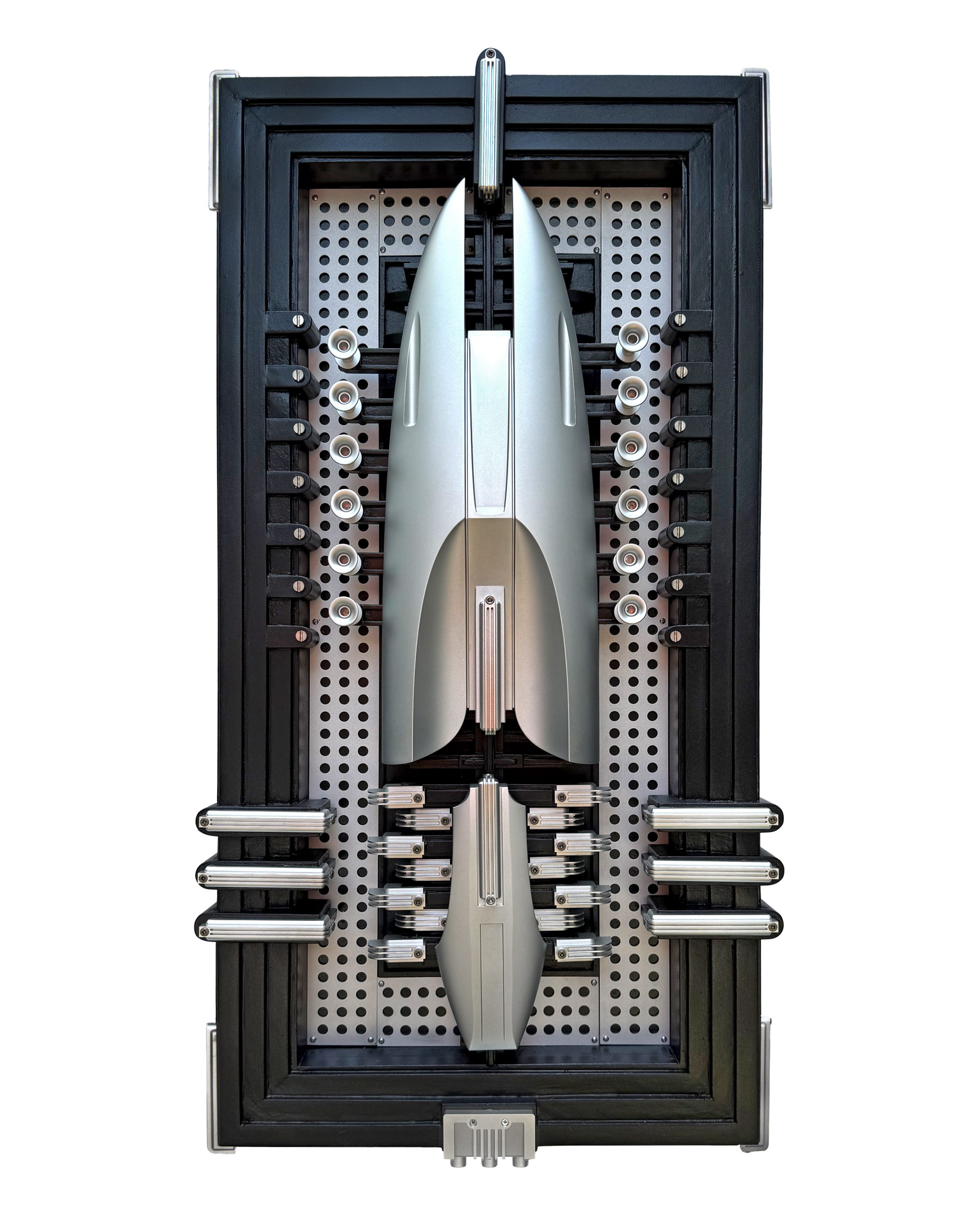
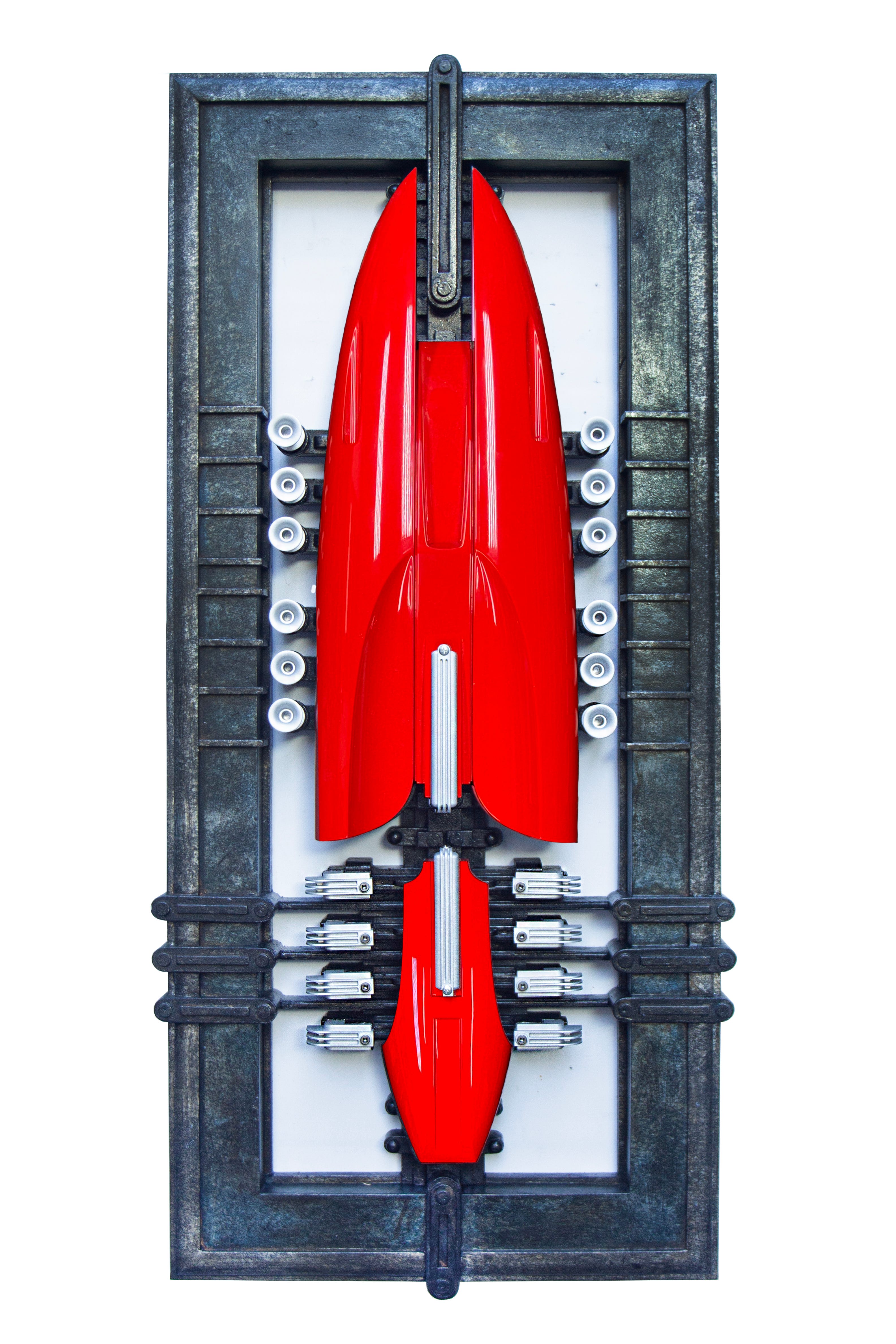
I am drawn to this imagined image of a beautifully polished, aerodynamic automobile located in a rain forest or in a weathered ancient ruin. The sense of this finely crafted sleek human shape contrasted with an intensely natural or even ancient crumbling stone environment is often an inspiration for my visions of design. This contrast makes one more acutely aware of both the automobile and the environment and speaks to some deeper sense of our place as humans in this world.
Often, inspiration arrives quietly. An image, a feeling, or even a fleeting moment can stay with me until it transforms into a piece.
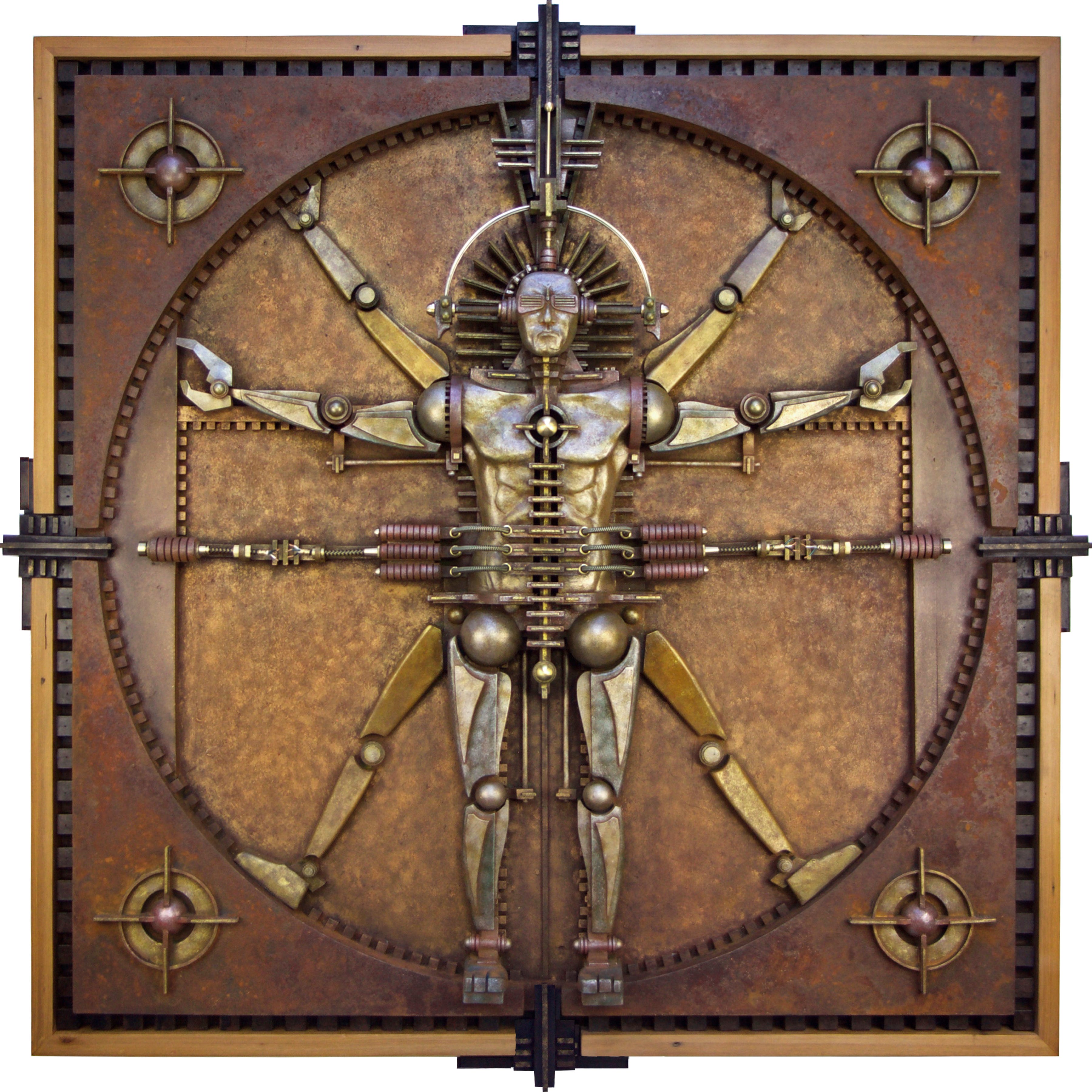
Your practice brings together traditional craftsmanship and digital fabrication. How do you approach the dialogue between hand, machine, and imagination?
Everything I create begins as a simple thumbnail sketch. It is in this moment that the mind and the hand are interconnected and that fleeting spark of inspiration can be captured. Everything that follows is a matter of development and execution. While I love the precision of the digital machine-made parts, it is the handmade elements that seem to more closely echo that creative moment. There is something about the imperfection that seems to tell a story that is more personal and more true.
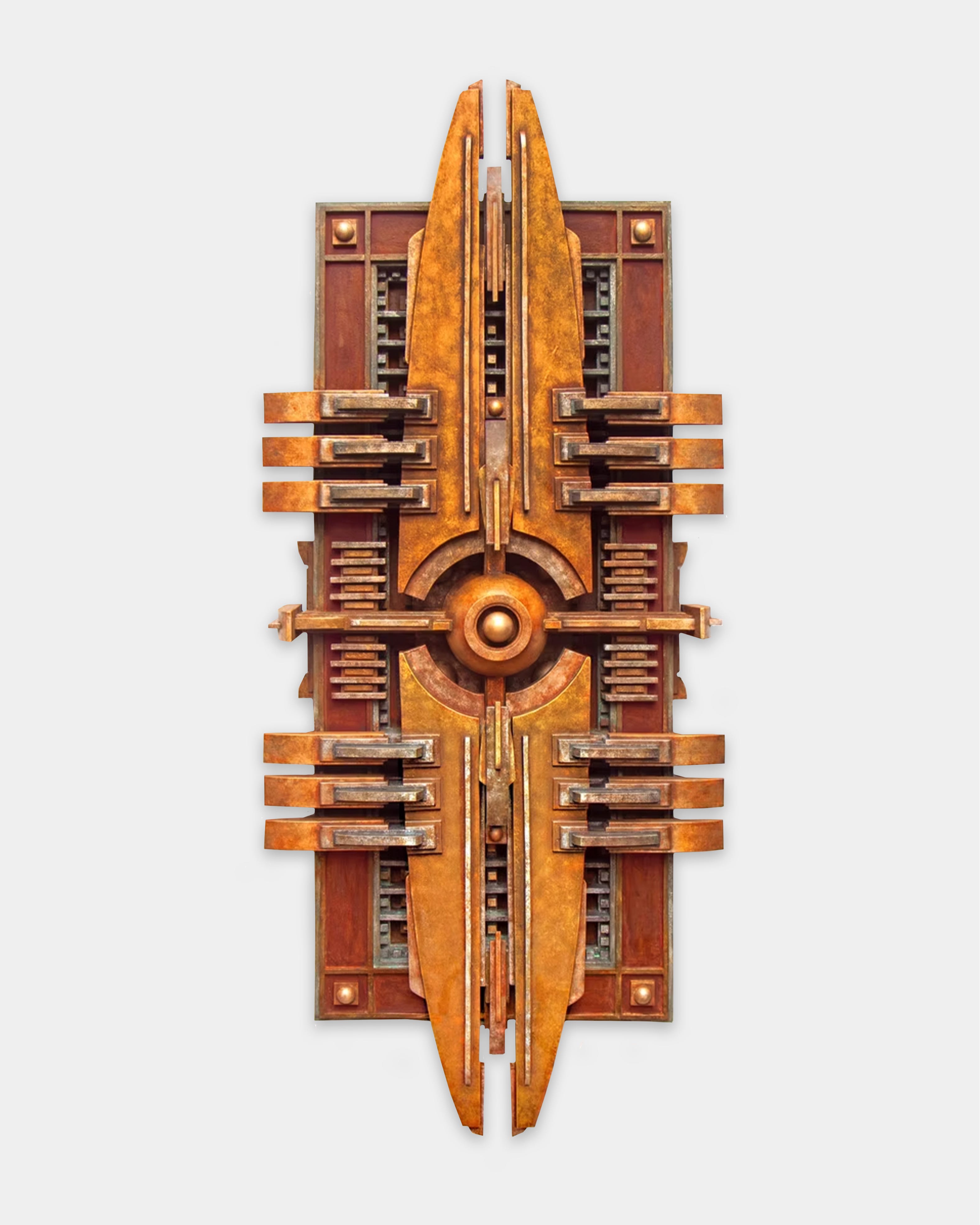
What are you currently exploring in your practice, and what questions are guiding your next works?
The work is forever an exploration of the language of form. I always have many more ideas than I can execute. This year, so far, I am focusing on the abstract work and not the figurative pieces. I am investigating the idea of larger works and perhaps installations.
If one of your sculptures were to be discovered hundreds of years from now, what would you want it to say about our time?
The Renaissance followed the Medieval Period and was the beginning of the modern era of science and invention. I have developed a series of art pieces I call Renaissance 2.0. I believe we stand on the threshold of a new period of human advancement and technological innovation that will exceed anything that came before and all that we can now imagine. Just as today when we look back on the Medieval period from an era of space travel, several hundred years from now will, in turn, scarcely be recognizable. I would hope that my work will retain a timeless quality and the forms will still be interesting and thought provoking to the people of that future time.
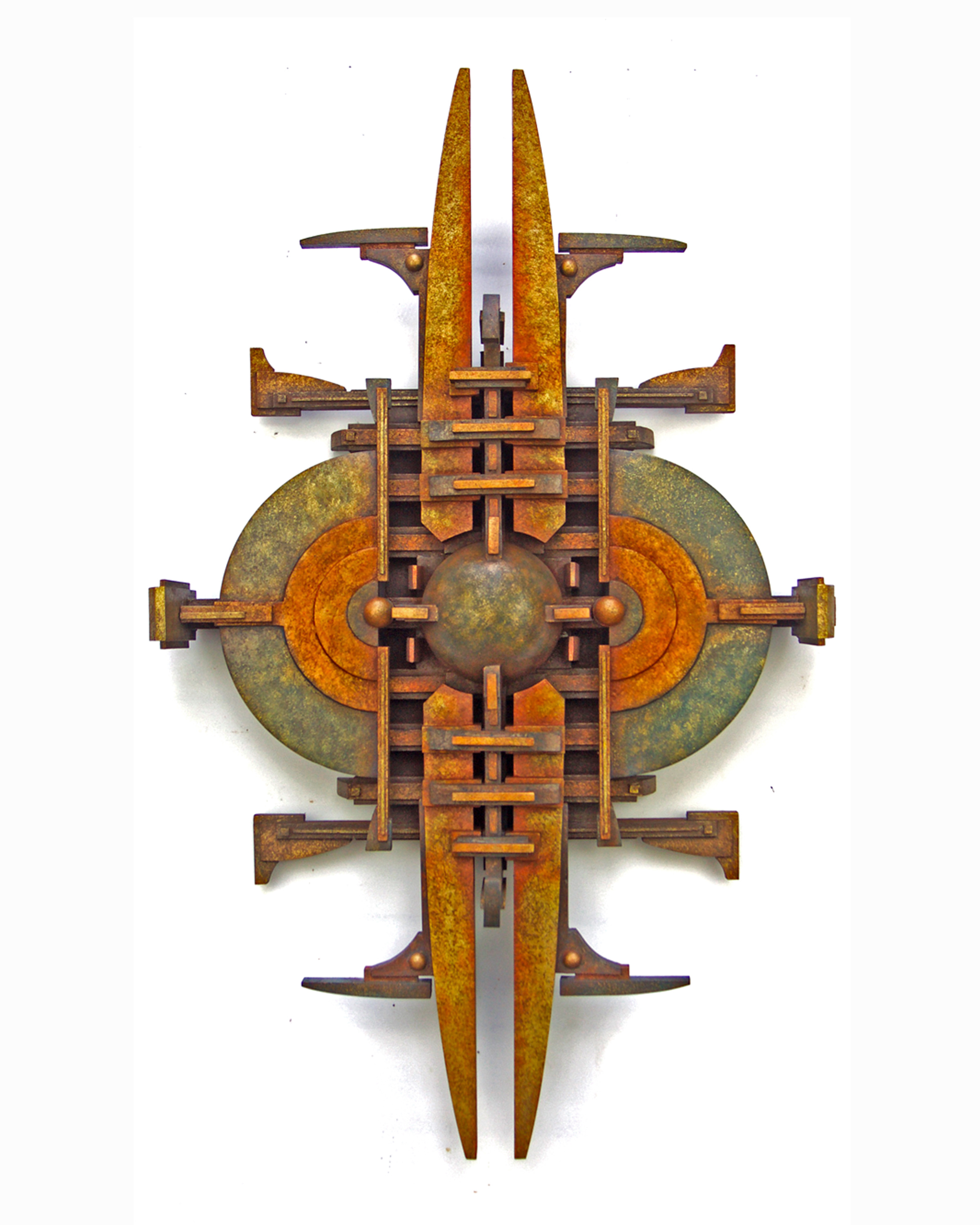
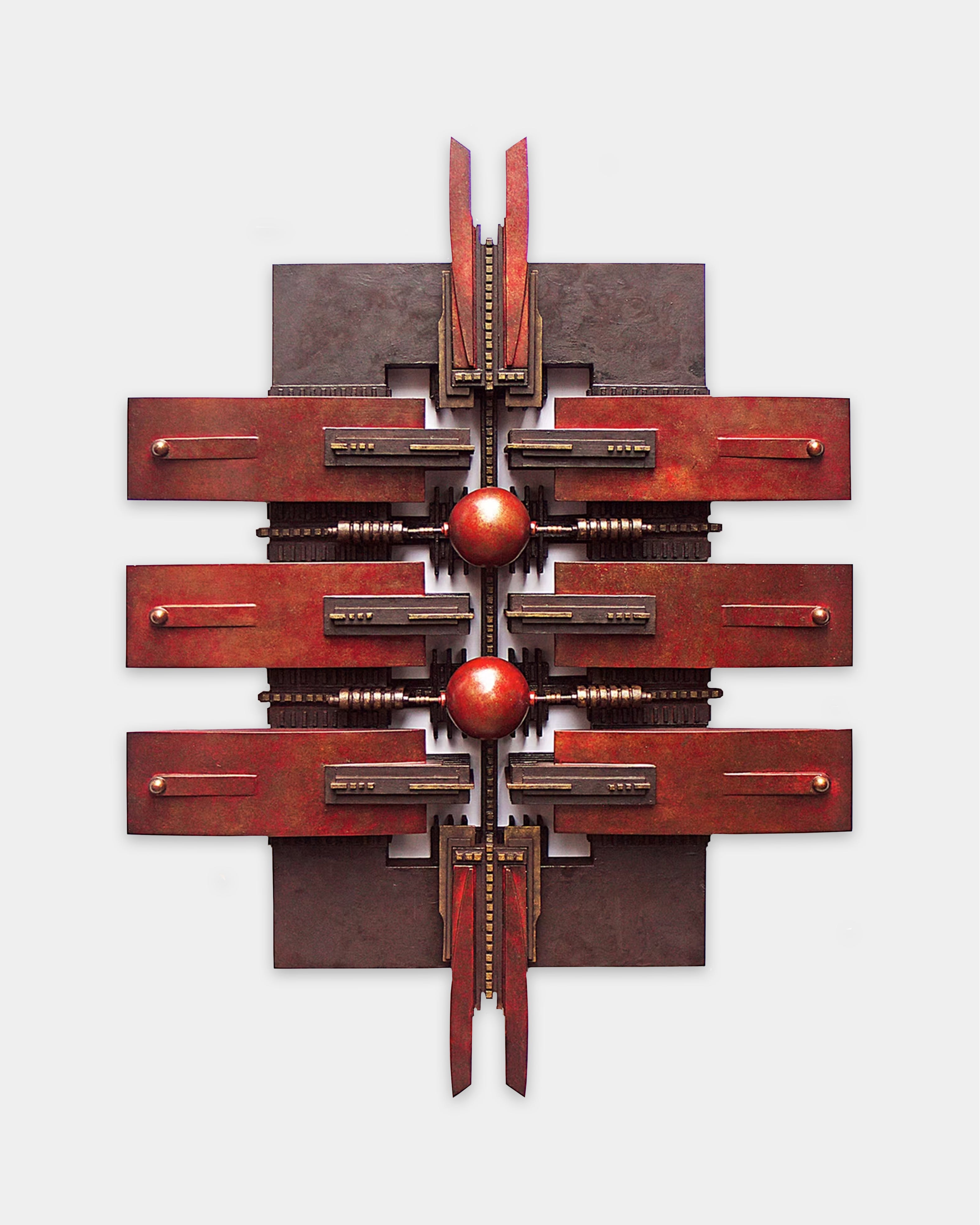
Which books have most shaped your vision of the future, and do they consciously or unconsciously inform the “relics” you create?
In my youth, I was inspired by the works of Arthur C. Clark and Isaac Asimov. An interesting book that comes to mind is Howard Hughes and His Flying Boat by Charles Barton. It was the story of Hughes building what became known as the “Spruce Goose” (a derogatory nickname) during World War 2. It tells of the relentless effort to overcome the impossible demands of wartime material shortages and political corruption. For me, it is about finding “a way” no matter what the obstacles or even, perhaps, the rationality of continuing. It was a process of employing available materials and technological innovation to solve a nearly impossible problem against impossible odds no matter what the cost. This story of resilience, passion and innovation still resonates with me today. I believe the Spruce Goose to be an incredible “relic” that embodies the human spirit of determination, innovation and perseverance, even in the face of inevitable failure.
As a visual person, I have been more deeply influenced by science fiction films and the creations of the designers who imagine a future—sometimes of beauty and hope, other times of devastation and despair. Years ago I bought a series of books called The Art of Star Wars. I loved studying the evolution of the creative process and how through design the creators were able to bring the stories to life. Many years later, I attended Art Center College of Design in Pasadena, CA, where many of the designers and illustrators of the film world are schooled and I experienced first hand something of the training and the culture that informs their art of storytelling.
Interview by Benjamin BENITA - LinkedIn