Stitched Memory: Between Matter and Body. Interview with Artist Michelle Alexander
Layering and stitching, an intimate dialogue of an artist with trauma and resilience

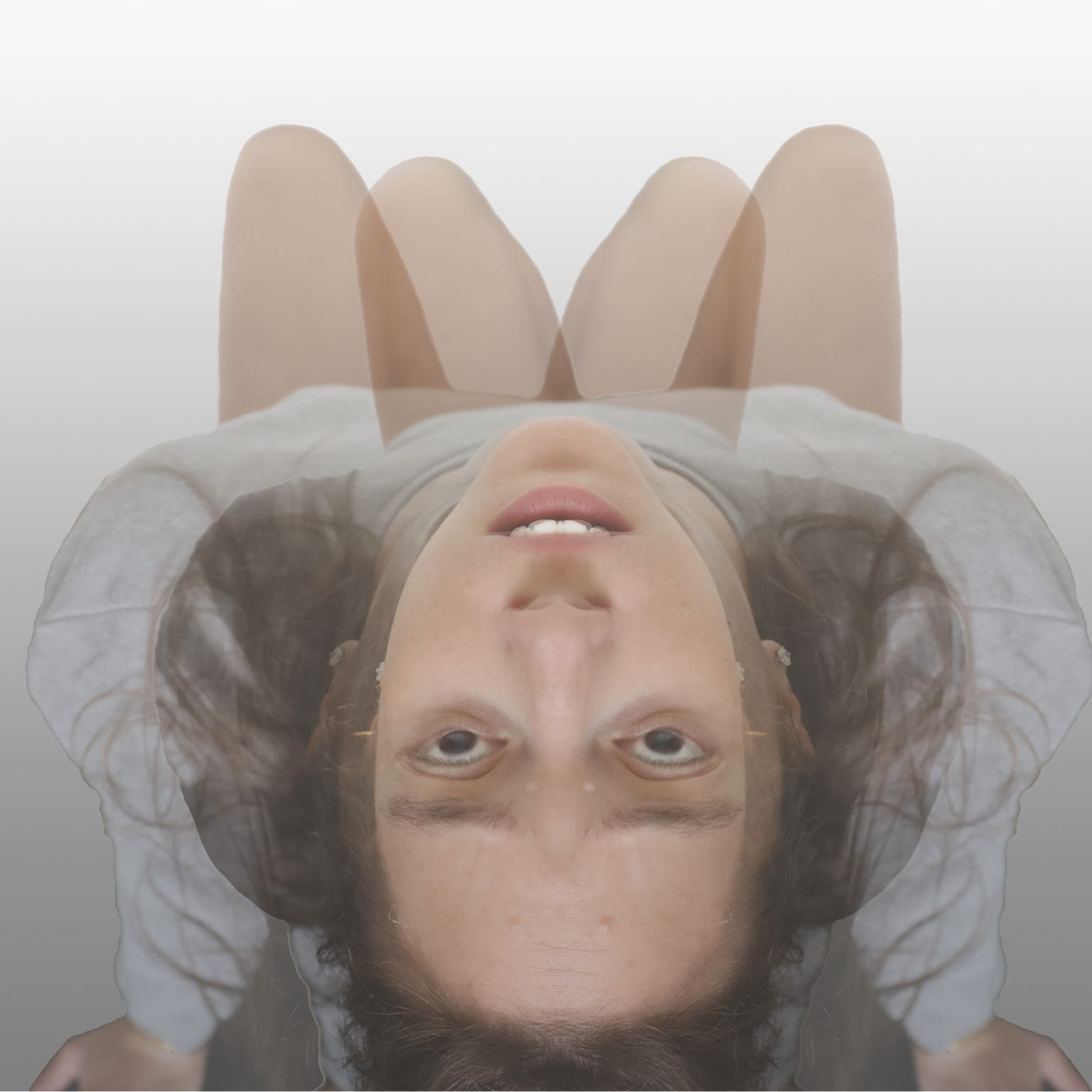
In Michelle Alexander’s work, artistic practice becomes a visceral and layered process, where body, gesture, and memory intertwine in a visual language that is deeply autobiographical and yet open to collective experience. The artist moves fluidly between photography, drawing, sewing, and painting — not seeking a polished blend of media, but allowing friction, rupture, and vulnerability to emerge.
“Layering helps things build slowly. It feels closer to how memory and trauma work: never clean, never all at once”, she explains. Her work begins with the body — the skin as an emotional surface — and with materials that evoke intimacy and discomfort. Scraps, stitches, broken lines become traces of what has been hurt, forgotten, or pieced back together.
And gesture becomes ritual, though never peaceful: “When I’m stitching, stapling or layering images, there’s a rhythm that helps me sit with things instead of trying to escape them. It’s meditative, but it also comes from anxiety, pressure, and feeling like I keep making the same mistakes”.
She recently curated an exhibition titled Connective Thread with Ivory Gate Gallery in Chicago; in this conversation, Alexander reflects on how art can offer a space to stay inside complexity without needing answers, transforming fragility into a possibility for connection.

Your works combine painting, photography, drawing, and sewing. How do these media interact in your art?
These media are tools that let me think with my hands. They each carry different emotional weights. Photography holds presence and absence. It feels raw and vulnerable, but is also completely untrustworthy and deceiving. Drawing is immediate, reactive, and instinctual.
It comes before language. Sewing holds a duality, too, communicating both care and violence. I use these methods in layers, building surfaces the way memory, trauma, and anxiety accumulate. The interaction is not about blending media cleanly but about allowing friction, interruption, and vulnerability to surface.
Texture and gesture appear to be central to your work. What role do they play in the creative process?
Texture and gesture are how I communicate what I cannot say in words. I often work from an internal tension, something that feels unresolved, and gesture allows me to process that physically. Texture always starts with the skin. It is the surface I am most drawn to when trying to make sense of things.
It is the texture that holds us tethered and tears us apart. Whether I am melting, stapling, or sewing, I am using touch to move through memory, discomfort, and longing. Texture gives form to what I am feeling when I do not know how else to let it out.


Your works seem to evoke fragments of memory and identity. Where does this narrative arise?
It comes from the experience of living in a body that is constantly being watched, misread, praised for the wrong reasons, or punished into silence. There is a disjointedness in that experience, something I feel in my skin. I return to garments, casts, and intimate materials because they carry weight, touch and memory.
Memory does not arrive linearly; it shows up in pieces, in textures, in objects, in the things we hold onto without knowing why. That is how I build the work: fragmented, layered, searching.
You often use materials that seem connected to intimacy. Is this a symbolic or emotional choice?
The materials I use come from instinct and emotion first. They are tied to the body: they hold memory, discomfort, care, and contradiction. I do not always choose them for symbolic reasons, but they end up carrying a lot of symbolic weight.
I am drawn to familiar objects, especially the ones we overlook. They let me speak about the body, discomfort, loneliness, pressure, perfection, beauty, control, shame, protection, and tenderness all at once.
Your works have a strong connection to the body and identity. How autobiographical is your art?
My art is telling my story, but that does not mean that is how it needs to be read, seen, or interpreted. The body is both the subject and the tool. I use mine to cast, imprint, and remember. The work comes from my body’s knowledge and experience, but I am always searching for the point where it stretches beyond me.

The more personal it is, the more universal it often becomes. I am constantly pushing myself to leave the work as open as possible with entry points for anyone to see themselves in it or have some kind of exchange with it.
Which artists, writers, or philosophers influence your research?
Seeing Denis Adams’ Walking on Wolves changed how I think about art. Having people walk through the piece, right on top of something that feels intimate and loaded, made the act of moving through the space part of the meaning.
It made me feel something deep and uncomfortable, and it stuck with me. It showed me that the way people move through a piece can inform what it’s trying to say.
Felix Gonzalez-Torres’ Portrait of Ross had a similar effect. That quiet invitation to take something from the work and to physically interact with it made grief and care feel present and shared. It made me realize how participation can create a kind of emotional weight.
I think about that a lot when I make work that asks people to walk on it, consume it, or move through it. It starts from something personal but opens up a space for others to enter.
I still come back to Louise Bourgeois for how raw and emotional her work is. She never tried to clean it up. She let the mess stay. Her work feels honest, full of memory and need.
And Kiki Smith, too, especially how she works with the body. She makes it feel sacred but also broken and leaking and real. They both showed me that the body can hold everything at once without needing to explain it.
How has your experience combining visual art and the study of the body enriched your interdisciplinary approach?
Studying the body through athletics and fashion has shaped how I understand control, beauty, pressure, failure, and disconnection from the self. Those experiences are still in my body, and they show up in the way I work with tension, form, and materials.
I am always thinking about what the body holds and feels, both emotionally, physically and symbolically. The way I work now just feels instinctual. It is not about separating things into categories. It is about leaning into how the body never fits neatly into one space, role, size, or meaning.
Combining disciplines lets me pull from all my lived experiences, the good and the painful, and try to make some kind of sense out of them.

You use scraps of fabric, sewn marks, and broken lines. What do these elements mean to you?
They feel like evidence. Scraps and seams hold stories. They show what has been cut, ripped, mended, and pulled back together. I am not interested in clean lines, or maybe I can’t relate to them. Broken ones feel more real. They carry vulnerability, rupture, and honesty.
I use these elements to sit with what is unresolved, to show how something that feels ruined or forgotten can still speak. Sometimes it is the fragments that hold the most truth and offer themselves up most.
Your works also seem to speak of trauma or wounds that become beauty. Is it a form of healing?
Yes, but not always a resolution. It is about holding space for what has been hurt without needing to fix it. I think of the work as a conversation between pain and resilience. There is beauty in that complexity, not because it has been resolved, but because it has been made visible.
The act of making becomes a form of care, for myself and for others who might see themselves in the work.
But sometimes I wonder if I am just stuck in it. If I am caught in the cycle of trauma and tension, like being on a treadmill that never really moves forward. I do not always know if it is healing or just surviving. But I keep making it anyway.
Interview by Fabio Pariante, X • Instagram • Website