


On Thursday, June 4, MuseumWeek invited museums around the world to imagine what their collections would say if they could speak. To mark this day dedicated to storytelling and the new possibilities of mediation, we sat down with Jonathan Talmi — because his answer to that question, in many ways, came before anyone else’s. In October 2024, this Toronto-based AI engineer launched The Living Museum: an experimental interface allowing anyone to converse with 1.2 million artifacts from the British Museum’s digital collection. Not about them. With them. What followed was equal parts wonder and uproar — and a debate the cultural world is still having today.

Could you introduce yourself and tell us what The Living Museum is — and what drew you to the museum experience rather than any other field?
My name is Jonathan Talmi and I’m a software engineer specializing in AI systems. I’m also an enjoyer of art, history, and museums. Whenever I travel to a new city, I make a point of visiting its museums and galleries if I have time.
I randomly stumbled upon a bookmark I saved from the British Museum’s digital collection a few years ago. An idea popped into my head: What if you could search across millions of artifacts in the collection using natural language? I was looking for a way to upskill in AI search at the time anyway. So I started building it. Over time, the project morphed into the conversational interface you see today.
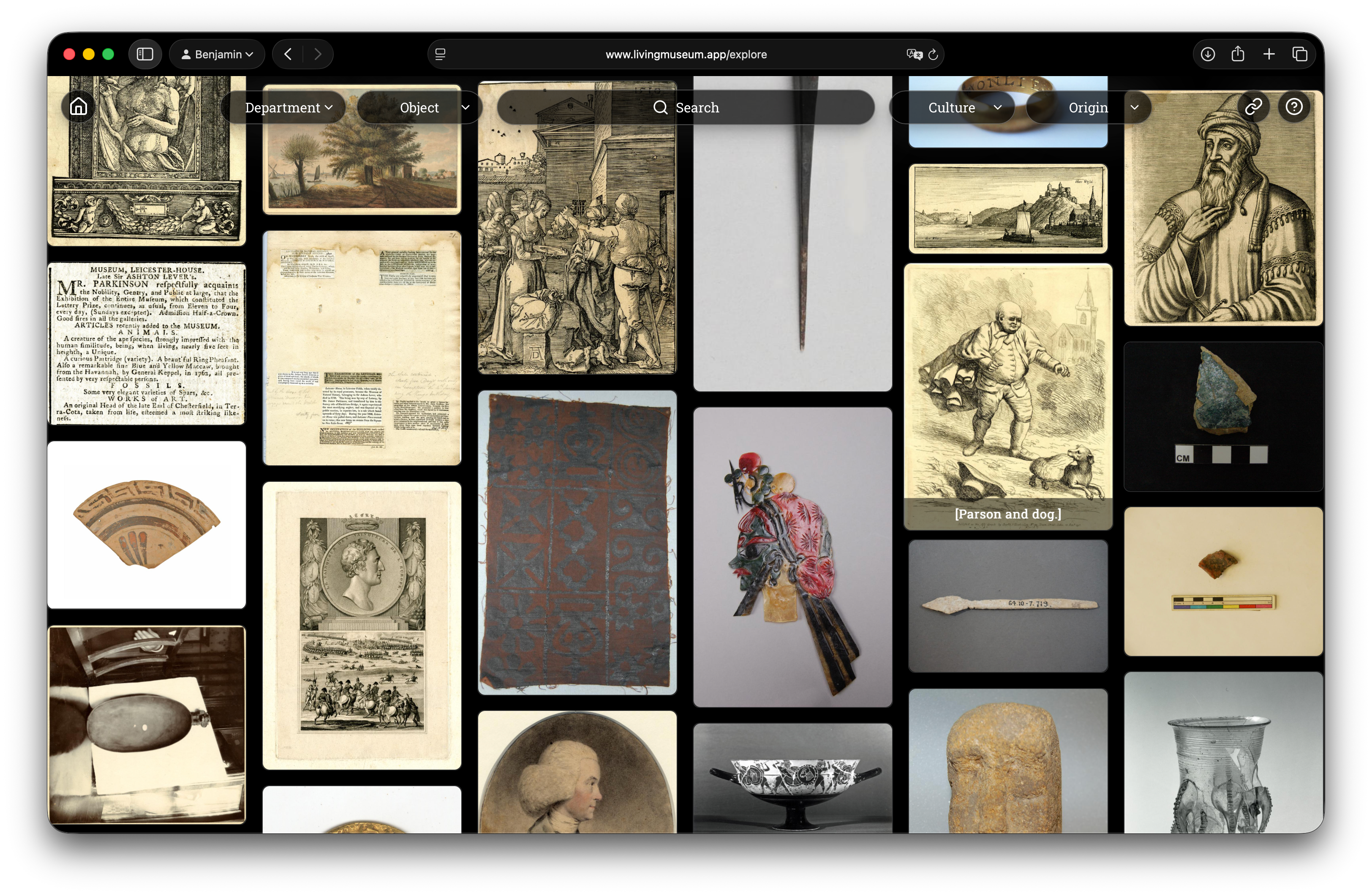
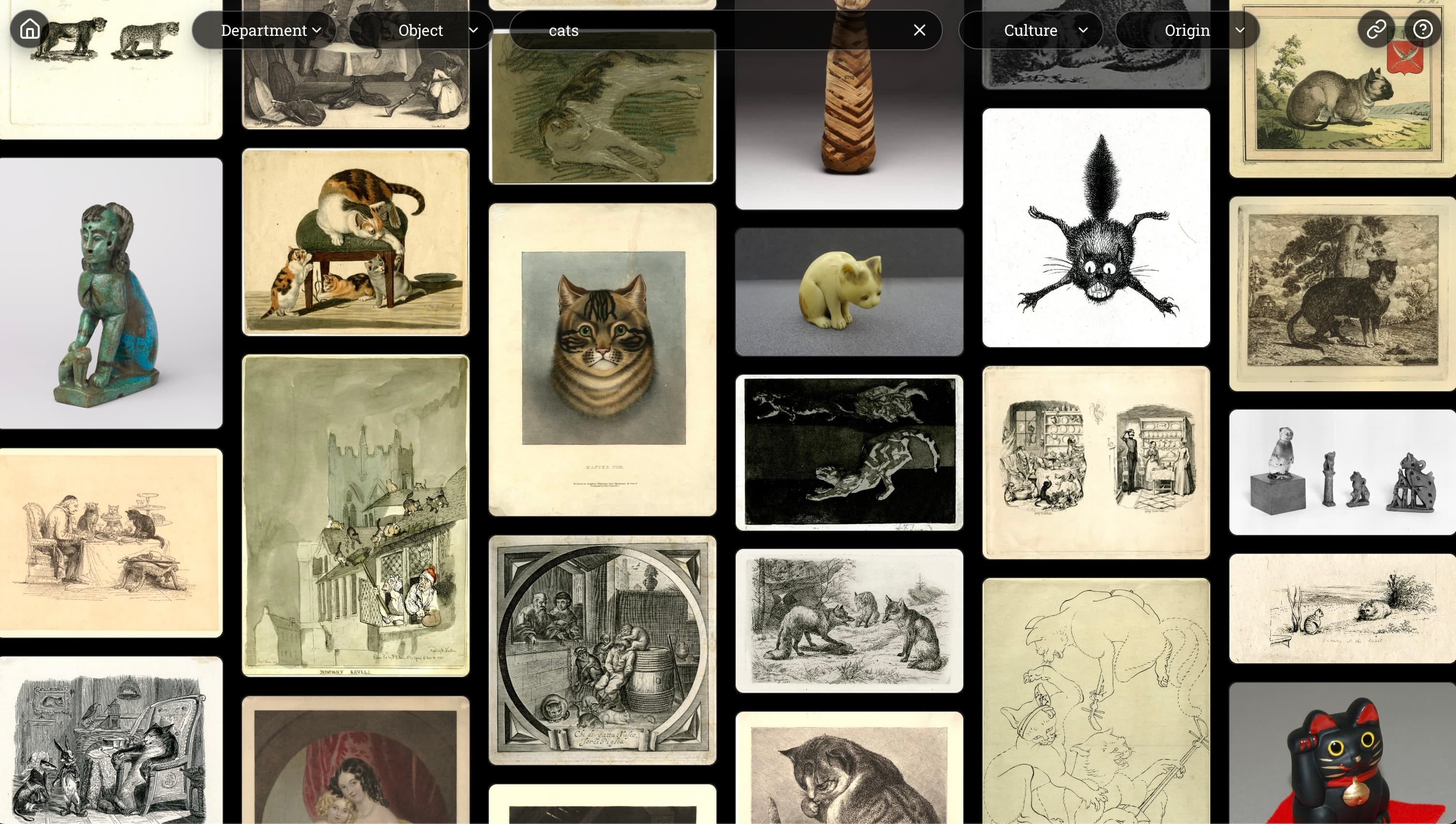
The Living Museum sparked very contrasted reactions: sharp criticism from some GLAM professionals around ethics and cultural representation, but also genuine enthusiasm from museums eager to adopt your solution. How did you experience that duality — and what did it teach you about the way the cultural sector perceives AI today?
While there was a sharp negative reaction on social media, that didn’t match my experience in private. Many people reached out to me and expressed interest in bringing this technology to their institutions. Many small museums in particular are eager to find ways to show off more of their collections, which are constrained by floor space.
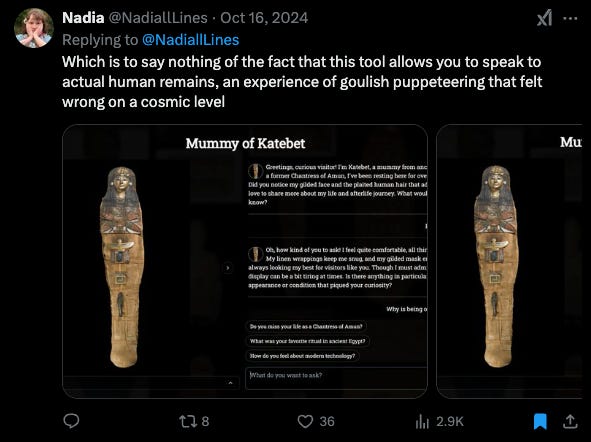
That said, when deploying this technology, it’s important for institutions to be able to define guardrails. Museums should be able to align these systems with their values and desired approaches to things like cultural sensitivity and the history of objects.
I’ll add that the online reaction revealed a reflexive distrust and antipathy towards AI that I was not expecting. I think of the Living Museum as an example of a way to increase public engagement with the work of museum professionals, not replace it. The project would not have been possible without meticulous cataloguing by curators and archivists.
Editor’s note: Jonathan documented the full story of The Living Museum’s viral reception — the criticism, the learnings, and his reflections — in a post published on his personal website. A highly recommended read: https://www.talms.me/posts/living-museum/
For our more tech-savvy readers, could you walk us through the technology behind the project — both the tools you used to build it and the ones that power the product itself?
The two main features of interest are natural language search, powered by semantic search, and artifact conversations, powered by LLMs. The search system uses query expansion, vector retrieval, and a reranker to generate search results from natural language queries. The artifact conversations are powered by an LLM which sees an artifact’s metadata and adopts the personality of the object.
What happens to the data collected from interactions on The Living Museum? And do you have any fun facts or surprising discoveries to share from those exchanges?
I use an analytics tool to store and review conversations without any personally identifiable information. When I first launched the Living Museum, I read through many chat logs to debug issues and improve response quality. I was surprised at the depth of some conversations. I saw conversations that went on for over a hundred messages. In one case, someone was collaborating with an Aztec mask on their Civilzation VI (a video game) strategy. Another person exchanged 167 messages with a Babylonian legal document in Catalan. I witnessed people from all ages and educational backgrounds using it. Some teachers even reached out to tell me they used this for classroom assignments.
If you imagine the museum of tomorrow — online and onsite — what role should AI play in the relationship between a visitor and a collection? And what has building The Living Museum taught you about what AI can do… and what it should not?
The Living Museum proved that AI can make museums more fun and accessible. Thousands of people from around the world gained a new way to interact with the British Museum’s online collection.
I believe that artifact conversations, while an engaging hook, are only part of the ideal experience. After a few messages, users wanted to move on to new objects, artists, or eras, but didn’t have an easy way to do that.
This was the main learning: AI should be your personal tour guide, helping you navigate the collection in person or at home. It would tailor your trip to your specific interests or hook into curated experiences designed by museum professionals. I’m working on a follow-up to the Living Museum, so if this sounds exciting to you, get in touch!
Interview by Benjamin BENITA
MORE
400 Tech Specialists, 100 Historians, 2 Years, One Vision: How China's Deji Art Museum Is Redefining the Visitor Experience

We had the privilege of meeting Ms. Lin AI, Director of the Deji Art Museum in Samarkand, during the International Conference on the Future of Museums organized by UNESCO in November 2025, in which we took part (see the link at the end of this article). Ms. AI graciously agreed to be interviewed for MuseumWeek…
Agnès Callu at the GrandPalaisRmn Chair of Excellence. Research and Aesthetic Loves at First Sight. Interview.

Agnès Callu, you are a historian and philosopher of art. You are a graduate of the École nationale des Chartes (Prix Lenoir), holder of a doctorate from Sciences Po Paris (Prix Chaix d’Est-Ange of the Académie des sciences morales et politiques for your published thesis on the Nietzschean philosopher Gaëtan Picon), Habil…
Yannick Lintz: Reinventing the Guimet

You are President of the Guimet – French National Museum of Asian Arts, one of the world’s largest museums of Asian art outside the Asian continent, with approximately 60,000 works and multidisciplinary teams covering conservation, research, mediation and programming. Before taking over the presidency of the Guimet, y…