


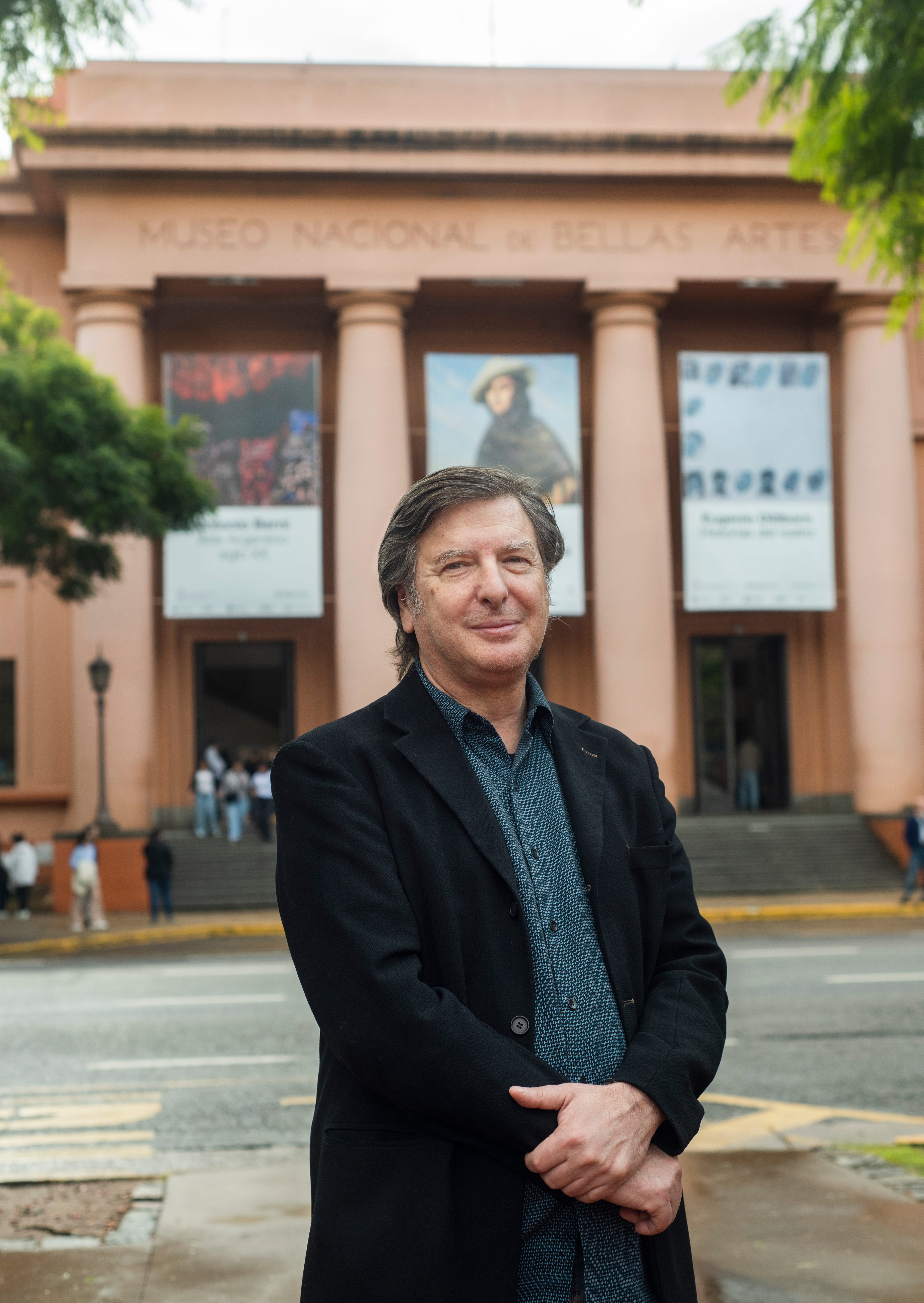
It is 2 June 2026, the second day of MuseumWeek 2026 — a day when museums are invited to imagine their future out loud. We are publishing a conversation that moves in the opposite direction: inward, and toward the essential. Andrés Duprat doesn’t speculate about what museums will become. He asks, quietly and precisely, what they must never stop being — places where you stand before an original work, take time to look, and allow yourself to be affected by it. In a landscape of generative tools, virtual experiences, and collective imaginaries, that may be the most radical position of all.
Architect, curator, and screenwriter, Duprat has directed the Museo Nacional de Bellas Artes (MNBA) in Buenos Aires since 2015, following an open public competition organised by Argentina’s Ministry of Culture. Previously, he led museums in Bahía Blanca, directed the Centro de Arte Contemporáneo at Espacio Fundación Telefónica, and served as Director of Visual Arts at Argentina’s Ministry of Culture. As a curator, he has presented over a hundred exhibitions across Argentina, France, Cuba, the United States, Chile, Mexico, Russia, and beyond.
Today, artworks circulate constantly through screens, reproductions and social media. What cannot be transferred from that circulation into the in-person museum experience?
It would seem plausible to think that the proliferation of images through the Internet — on phones, tablets and computers — would lead to a decline in museum attendance. For example, if we have already seen the Mona Lisa thousands of times online, why would we go see it in person? And yet, paradoxically, the opposite happens: the multiplication and familiarity of the image works as a lure, a kind of advertisement for a desired object that we feel compelled to see directly, in order to have our own personal experience in front of the original. This is borne out by reality itself, as reflected in the large numbers of people visiting museums despite the existence of virtual tours and all the other online tools available to experience artworks remotely.
What cannot be replaced by a screen is precisely what continues to give art museums their relevance and meaning: standing before the original object, unmediated. In the case of a work of art, it means encountering firsthand something created in another time and place. Being face to face with an object produced by another human being decades or even centuries ago. A kind of portal or bridge through time. It is also there that the possibility of a deeper sensory connection with the object emerges: taking time to look, going beyond the surface, trying to enter into the work, allowing oneself to be affected by it, rather than viewing it distractedly, as one would look at an advertisement.


There is often discussion about not over-explaining artworks. In practice, though, someone still has to decide what is shown and how. How are those decisions made today?
We should not forget that what matters most is the work itself, regardless of the fact that contextual information can often be an interesting complement. Still, it is true that there is a tendency toward over-explanation. Using a work of art to talk about something else can be a valid resource, but it also risks diverting attention and making us lose sight of the ontological universe proposed by the work itself.
There is a weakness — and a risk — when explanations about artworks are overused, and that is that they often appear when people assume visual language is not enough on its own. Visual language can be complex, especially because we lack both the practice and the education needed to approach it freely. It is something that is almost absent — or very marginal — in our educational system, unlike musical or literary appreciation.
In the field of visual arts, I call those kinds of explanations “crutches,” because they function as support, guidance or distraction whenever we feel helpless or unable to approach an artwork directly. We deny ourselves the aesthetic experience and try to replace it with an intellectual one. And many times those explanations, anecdotes and contextual notes end up destroying the possibility of a sensitive connection with the work.
People then resort to anecdotes — that the artist had a difficult childhood, participated in a war, lived in exile — or to more literal interpretations, such as claiming that the color red means a specific thing for a particular artist, or that a certain figure symbolizes something else entirely, all in order to avoid confronting the exposure and uncertainty that sometimes comes with standing in front of a work of art.
There is an important problem of translation there, based on the idea that every artwork contains a secret, cryptic message that must somehow be decoded.
Visual art is a polysemic language: it allows for multiple readings and speaks through its own grammar, shaped by composition, color, texture and other visual elements. If it were simply a vehicle for delivering a message, it would be much easier just to write the message down directly, wouldn’t it?
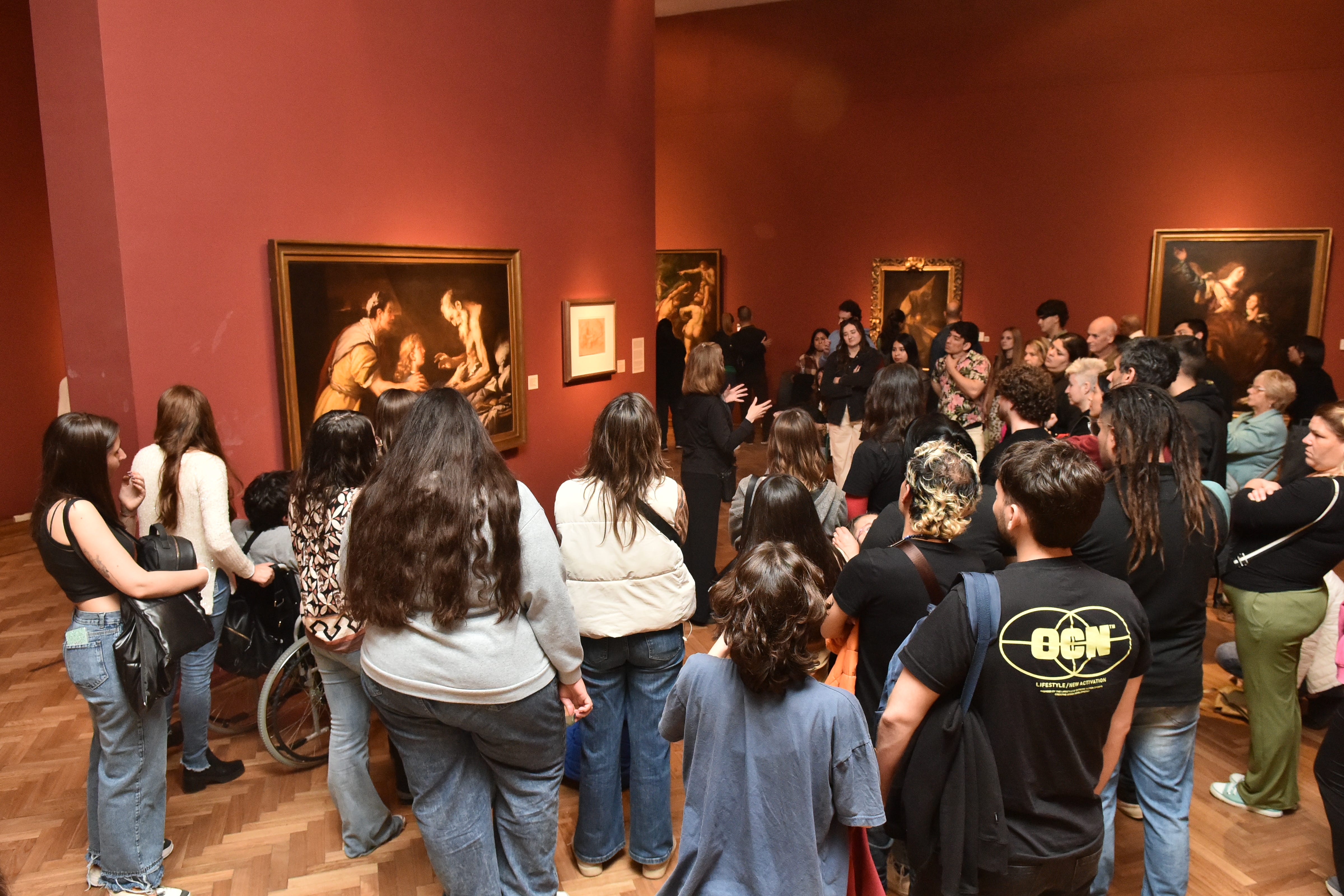
The museum proposes a particular way of seeing: routes, rhythms, relationships between works. How much of that is designed, and how much remains open?
The museum, both through its permanent collection display and its temporary exhibitions, establishes an order, a sequence, pathways and relationships. That is precisely what exhibition curatorship is about.
That order or sequence can respond to many different ideas related to particular artists, schools, chronologies or movements.
At the same time, the curatorial script is only a guide; it does not mean that visitors are expected to follow it rigidly. The sequence is not closed: people can create their own paths, isolate certain works and move away from the proposed organization, since it is usually not a rigid structure but rather a way of arranging things so visitors can have an engaging experience throughout the exhibition.
The MNBA collection was built over more than a century, under very different criteria. Today, does that accumulated history function more as a foundation or as a constraint?
That is precisely what makes a museum like the National Museum of Fine Arts so interesting: since the late nineteenth century — for more than 130 years now — it has been collecting works that reflect the tastes of each period.
It was founded with a broad, encyclopedic spirit. The collection includes furniture, paintings, sculptures and objects, mainly from Argentine and European art, but also African, Eastern and Pre-Columbian art.
The earliest acquisitions reveal a strong interest in European art, especially French, but also Spanish and Italian.
Over time, those criteria evolved. Societies change, fashions and tastes change, and that naturally affects the kinds of works incorporated into the collection.
Because beyond valuing the works themselves, the collection also allows us to read an era through its tastes and preferences.
What I find especially interesting is that it is an eclectic collection — one that was never rigid or dogmatic from the beginning, and that continued incorporating very different kinds of works over time. That broad foundation gives us considerable freedom when it comes to continuing to expand the collection today.
Directing a museum like this means sustaining a tradition while also making decisions in the present. Where does the greatest tension lie today?
For me, your question captures the greatest challenge faced by an institution such as the National Museum of Fine Arts: on the one hand, preserving tradition, and on the other, incorporating the issues and concerns of our own time. Being a museum that allows us to look into history while also remaining sensitive to the challenges of the present.
I believe museums should be respectful of the past and present it as it was, rather than correcting it. In many major museums, especially in Europe and North America, there is an attempt to rewrite the past according to contemporary parameters because certain aspects now feel uncomfortable. My position is that things should remain as they were, because that — however painful it may be — serves as an example, or counterexample, of what we once were as a society at a particular moment in time.
In any case, the task is not to correct the past but to broaden the perspective: to incorporate new approaches, include overlooked episodes, avoid repeating the same mistakes and expand the conversation.
At the same time, I believe museums must remain permeable to contemporary reality. Not to immediate news cycles, trends or temporary disputes, but to philosophical currents, technological developments and the broader challenges of an era. Museums should not become sealed or impregnable institutions. They were created by society and belong to society, and therefore they must remain open and capable of reflecting it.
What we do today is also constructing an image that, in the future, will be read as a reflection of how we understood our own present.
As for changes in concepts, technologies or artistic formats, I see no difficulty in incorporating them into the collection and allowing them to dialogue with historical works. We are fully aware that the field of artistic production is dynamic and constantly expanding. One could even say that the history of art is, to a large extent, the history of its many transformations, ruptures and mutations.
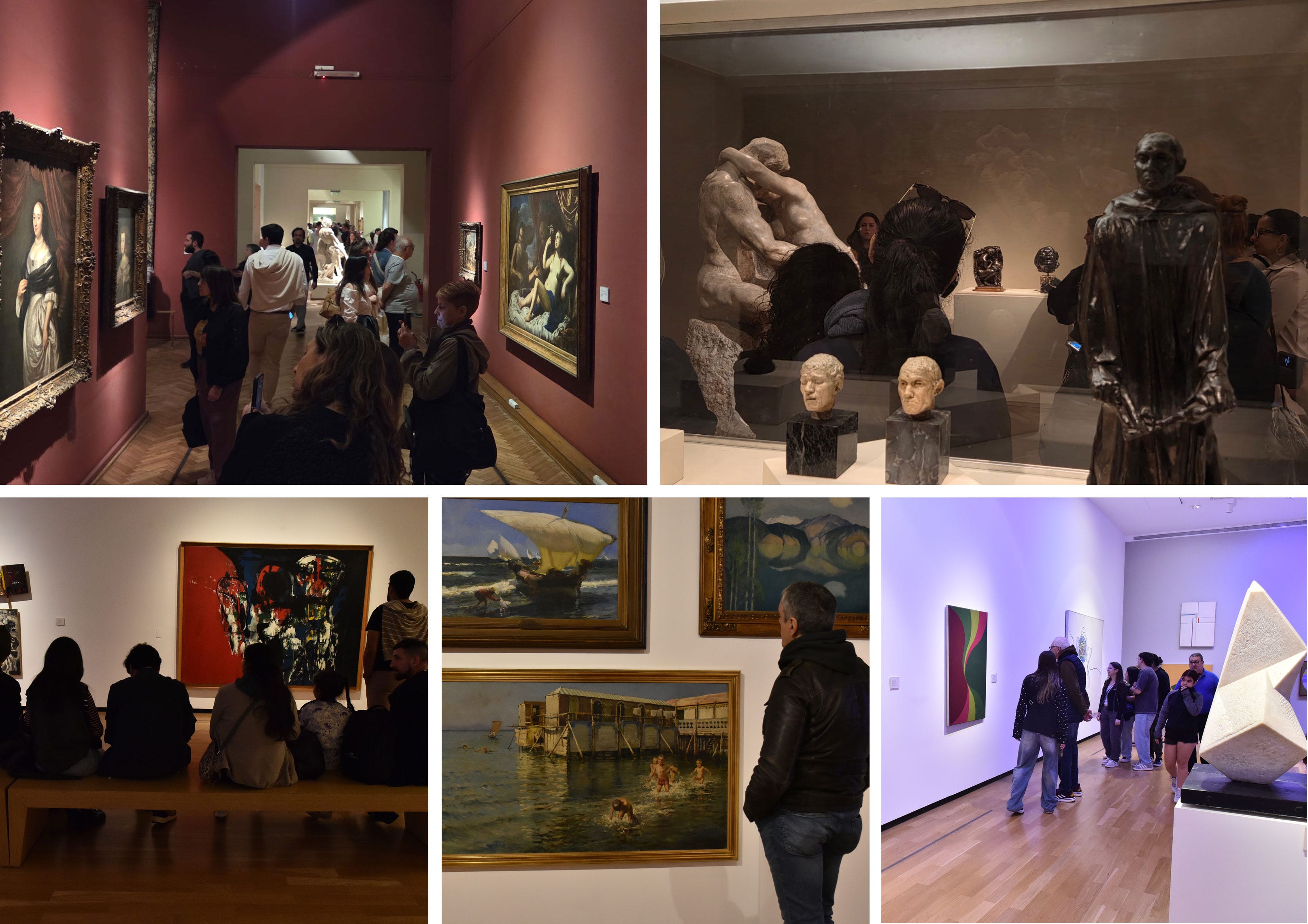
The crowds attending La Noche de los Museos reflect the enduring relevance of the in-person museum experience.
Interview by Gabriela Berardi
MORE INFO
Andrés Duprat is an architect, art curator and screenwriter. He has served as Director of Argentina’s National Museum of Fine Arts since December 2015. Previously, he directed the Fundación Telefónica Art Center in Buenos Aires and the Museum of Contemporary Art in Bahía Blanca. As a curator, he has organized more than one hundred exhibitions in museums and art centers across Argentina, France, the United States, China, Mexico, Italy, Cuba, Chile, Russia, Egypt, Spain and Japan, among others. In 2017, he curated the Argentine Pavilion at the Venice Art Biennale. He has been decorated by both France and Italy for his contributions to art and culture.
He is also the screenwriter of the series Bellas Artes and of feature films including Official Competition, My Masterpiece, The Distinguished Citizen and The Man Next Door, all directed by Mariano Cohn and Gastón Duprat and internationally recognized.
Founded in 1896, the National Museum of Fine Arts is Argentina’s leading public institution dedicated to the visual arts and houses one of the region’s most important collections, with works ranging from the Middle Ages to contemporary artistic production.